
Sales teams usually don't need more hype. They need fewer bad habits, cleaner feedback, and a tighter loop between what a rep does on a call and what the manager changes the next day. If the pipeline has been soft, the interviews have looked fine, and the training deck keeps getting polished while results stay flat, the problem probably isn't attitude. It's that the team hasn't built a system for changing observable selling behavior under real pressure.
That's the answer to how to improve on sales. Not louder coaching. Not another personality test. Not a prettier script that nobody uses when a buyer pushes back. The teams that improve fastest make selling measurable, then practice the exact skills that drive conversion, then score those skills the same way for hiring, onboarding, and live coaching.
Why Most Sales Improvement Advice Falls Flat
Most sales advice fails because it attacks the wrong layer. A rep can memorize phrasing, nod through training, and still blow the discovery call the moment a buyer asks, “Why should this change now?” The issue isn't knowledge. It's whether the rep can produce the right behavior in real time, with noise, pressure, and a skeptical buyer on the other side.
The market loves to reward confidence theater. Leaders hear a rep sound polished in an interview and assume the skill is there. Then the rep avoids hard questions, misses the next step, and leaves the call with vague interest instead of a clear path forward. That's why charisma is overrated and observable behavior matters more than attitude.
Practical rule: If a skill can't be seen in a live call, it can't be coached properly.
Harvard Business Review's sales data makes the point bluntly. Firms that responded to inbound leads within one hour were 7 times more likely to qualify the lead than firms that waited even 1 hour, and 60 times more likely than firms that waited 24 hours or longer. The average company took 42 hours to respond, while the fastest companies responded in under 5 minutes. That doesn't just reward speed, it rewards a working system, because process design, routing, and automation shape the conversation before a rep starts persuading. Harvard Business Review summary in Korn Ferry's sales transformation article
The core mistake leaders keep making
Leaders keep trying to fix performance with motivation, but motivation doesn't survive a Tuesday afternoon full of objections. Reps need repetition against realistic scenarios, plus feedback that points to one behavior at a time. A script can help, but only if the rep can execute it while the buyer resists.
That's why the focus has to shift from “sound better” to “do this exact thing on the call.” A cleaner opening, a sharper qualifying question, a more direct next-step ask. Those are coachable behaviors. Broad advice about confidence and mindset isn't.
The same logic applies to tooling. If a team wants help making that feedback loop consistent, one option is improve sales performance with MakeAutomation, which sits in the broader category of workflow automation and process support. The point isn't the brand. The point is that sales performance rises when reps spend less time on manual friction and more time on timely follow-up and measurable execution.
The Selling Behaviors That Move Quota
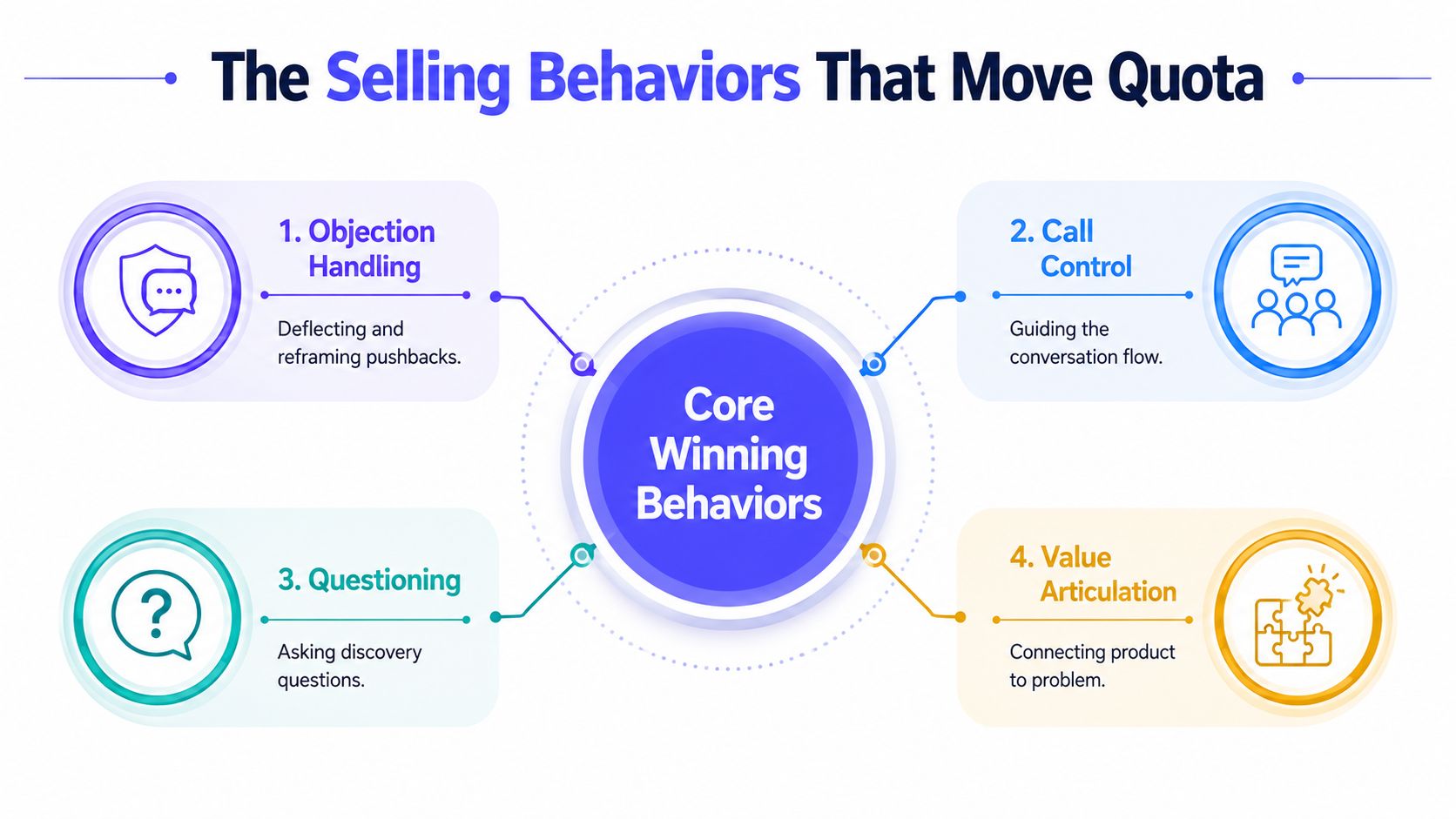
The fastest way to improve sales is to stop coaching abstractions. “Be more consultative” is useless unless the team can translate it into observable actions. The reps who win don't just talk well. They handle objections cleanly, steer the call, ask useful questions, and lock the next step before the buyer drifts away.
Objection handling is not arguing
Good objection handling doesn't mean overpowering the buyer. It means naming the concern, reframing it, and moving the conversation forward without sounding defensive. A weak rep hears “too expensive” and starts discounting the deal in their head. A strong rep asks what value the buyer is comparing, then ties the issue back to pain and urgency.
That behavior is visible. It shows up in how the rep responds after the pushback, whether they stay calm, and whether they earn another minute of attention. If the rep can't do that live, no amount of theory will matter.
Call control keeps the buyer from running the meeting
Call control is the ability to guide the conversation without sounding scripted. Some reps let buyers wander into product trivia, random stakeholder stories, or pricing too early. Better reps keep the call moving toward diagnosis, relevance, and commitment.
Questioning and value articulation separate busy reps from effective ones
Questioning is simple to define and hard to do well. It means asking questions that surface pain, consequence, and decision criteria instead of filling silence with feature commentary. Value articulation is the companion skill. The rep connects the product to the customer's problem in plain language, not in product marketing jargon.
Strong teams coach the questions that expose pain, not the ones that sound smart in a training room.
For frameworks like BANT or MEDDICC, these behaviors come first. If the rep can't control the call, ask good questions, and handle resistance, the framework becomes paperwork. Once the core behaviors are reliable, the methodology starts to matter because it sits on top of a real selling skill set.
Build a Practice Routine Reps Will Actually Run
Training dies when it feels optional. Reps skip it because it's vague, too long, or disconnected from the calls they're trying to win. The routine has to be short enough to survive a busy week and specific enough to feel like sales work, not homework.
Keep the cadence tight and repeatable
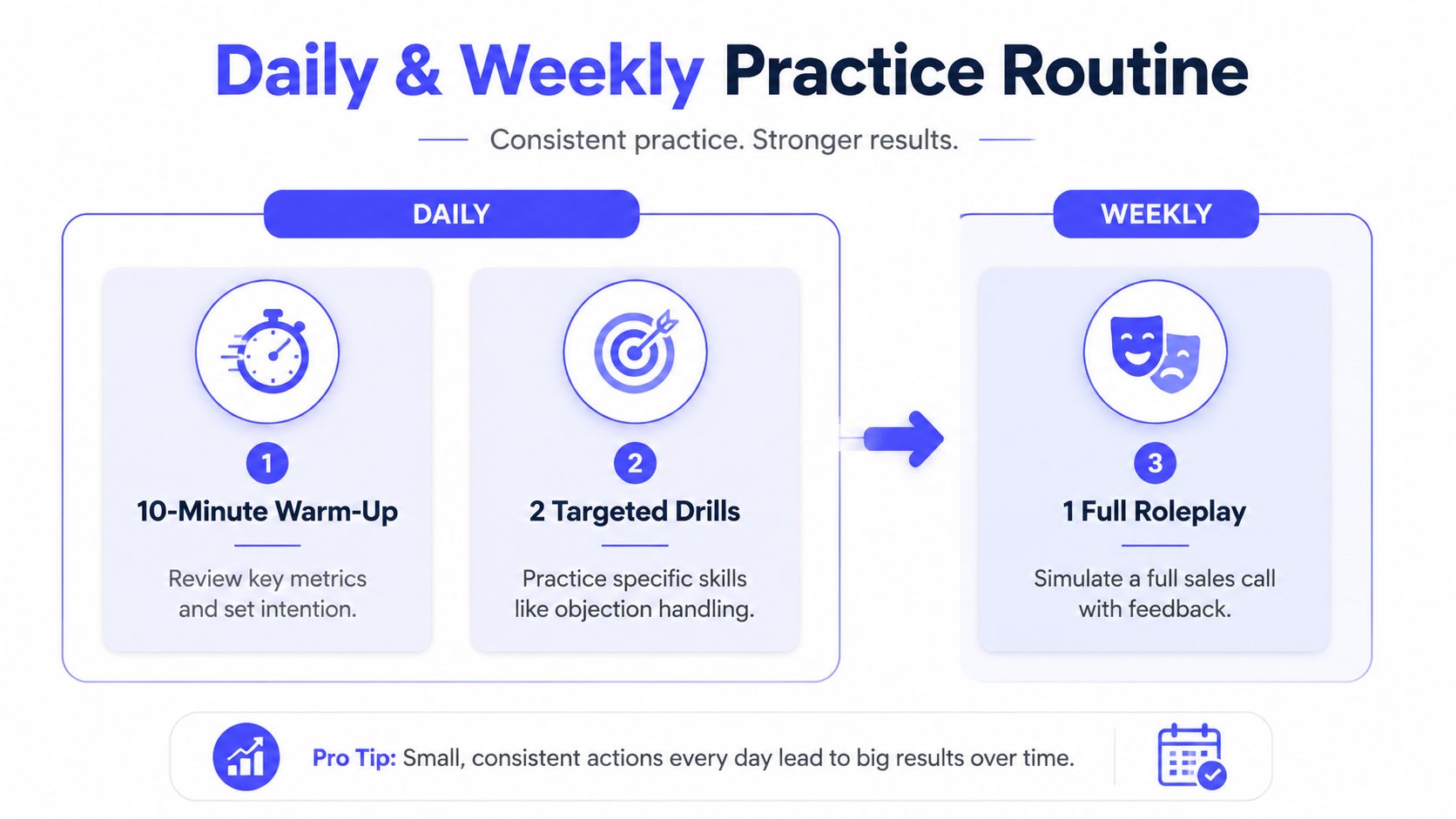
A simple cadence works better than a grand program. Start the day with a 10-minute warm-up that reviews one target behavior and one live objective. Then run 2 targeted drills that isolate a single skill, such as framing a discovery question or recovering from a pricing pushback. End the week with 1 full roleplay, because reps still need to string the skills together in sequence.
The best objection sets are the ones the team hears. Pricing pressure, “send me info,” “we're already using someone,” and “not now” should be in the drill bank. That's where reps usually lose control of the conversation, and that's where practice should live. For teams that want to compare roleplay formats and tooling, the guide on cold call roleplay tools is a useful starting point.
Make the drill feel like the job
A good drill has a buyer context, a clear rep objective, and a scoreable outcome. If the exercise is too abstract, reps coast through it and learn nothing. If it mirrors the buyer persona and the stage of the deal, the rep starts building muscle memory.
A practical checklist keeps the session honest.
- One skill only: Don't mix discovery, pricing, and close recovery in the same short drill.
- Real objection language: Use the phrases buyers say, not polished workshop language.
- Immediate scoring: Review the answer while the memory is fresh.
- Visible progression: Track whether the same rep gets cleaner on the same scenario over time.
Short scenarios and a shared scorecard can keep the routine useful. The point is consistency: reps should know exactly what to practise, how it's scored, and what better looks like.
Coaching From a Real Call to a Clear Fix
A manager hears this all the time. “The rep sounds good, but deals keep stalling.” That usually means the rep is performing well in the abstract and underperforming where it matters. The fix starts with a real call, not a vague judgment.
A discovery-stage miss should lead to a single diagnosis
Consider an SDR who books meetings but loses momentum during discovery. The manager listens to two recent calls and notices the same pattern. The rep asks broad questions, but never follows the buyer's answer far enough to uncover pain, consequence, or a decision process. The buyer leaves feeling heard, but not moved.
That diagnosis is specific enough to coach. The manager doesn't say “be more confident.” The manager says, “You're collecting facts, but you're not digging into impact.” That changes the drill immediately.
Build the fix around one weakness, not five
The next step is a two-week focused plan. One roleplay scenario, one live-call behavior, one scorecard. The rep practices only qualifying questions and next-step control until the manager sees a cleaner pattern in live calls. If the rep can't convert discovery into a qualified next step, the problem isn't effort. It's execution.
That kind of call review becomes much easier when the team has a system for transcription, call notes, and searchable feedback. A product like NL for recruiters from Noota sits in that category, because the value comes from turning conversations into reviewable evidence instead of relying on memory and opinion. The broader point is simple. Coaching works when managers can point to the exact moment the behavior broke down.
Feedback should name the moment, the question, and the next move.
This is also where manager discipline matters. Don't turn one coaching session into a personality audit. Keep the loop narrow. Observe the call, identify the missed behavior, run a focused drill, then check the next two calls for the same pattern. That's how skill changes stick.
Measure What Changes Behavior, Not What Looks Impressive
Dashboards get built because they're easy to show in meetings. They get ignored because they often track output without revealing what a rep is doing differently. A useful dashboard doesn't need twenty tabs. It needs a short list of signals that tell a manager what to coach next.
The right metrics answer coaching questions
The best metrics are behavior-linked. Did the rep complete the required qualification questions? Did they secure a next step instead of leaving the deal loose? Did they recover after an objection, or did the call collapse? Those are coaching questions, not vanity numbers.
| Sales Improvement Metrics That Drive Behavior | What It Tells You | Starter Benchmark |
|---|---|---|
| Qualifying question completion | Whether the rep is using the agreed discovery pattern | Aim for 80%+ adoption within 30 days when the method is instrumented, as noted in the methodology guidance |
| Next-step set rate | Whether calls end with a clear commitment | Track by rep and by stage |
| Objection recovery rate | Whether the rep can stay in the conversation after pushback | Compare across the same objection set |
| Methodology adherence | Whether required fields and questions are being used consistently | Review weekly, not quarterly |
| Ramp progress | Whether new hires are moving from practice to live execution | Compare against the same scenarios used in onboarding |
A methodology rollout should be treated like a four-week operating cycle. Pick one or two frameworks, define the call guide and CRM qualifiers, train with realistic role-plays, then score 10 to 20 live calls per rep against the core elements before changing scripts or objection handling. If adoption falls below the 80%+ target within 30 days, the framework is probably too complex or the tooling isn't reinforcing it. Business.com methodology guidance
For a broader KPI view, the team can also consult sales enablement KPI guidance, then trim the list aggressively. More metrics don't create clarity. Better metrics do.
Build one page, not twenty tabs
The manager should be able to open a single view and answer three questions. What behavior is weak? Which rep needs the most help? What changed after the last coaching session? If the answer requires a spreadsheet scavenger hunt, the dashboard is too heavy.
Track the behavior that changed, not the report that impressed the VP.
That discipline also protects the team from meaningless activity. A rep can be busy all week and still not improve. The dashboard should expose that gap, not hide it.
Fix the Hiring and Onboarding Side of the Problem
Sales improvement doesn't start after the offer letter. It starts with the rubric used to decide who gets hired in the first place. Too many teams hire for confidence, then spend months trying to teach the skills they should have tested on day one.
Use the same scenario across hiring and onboarding
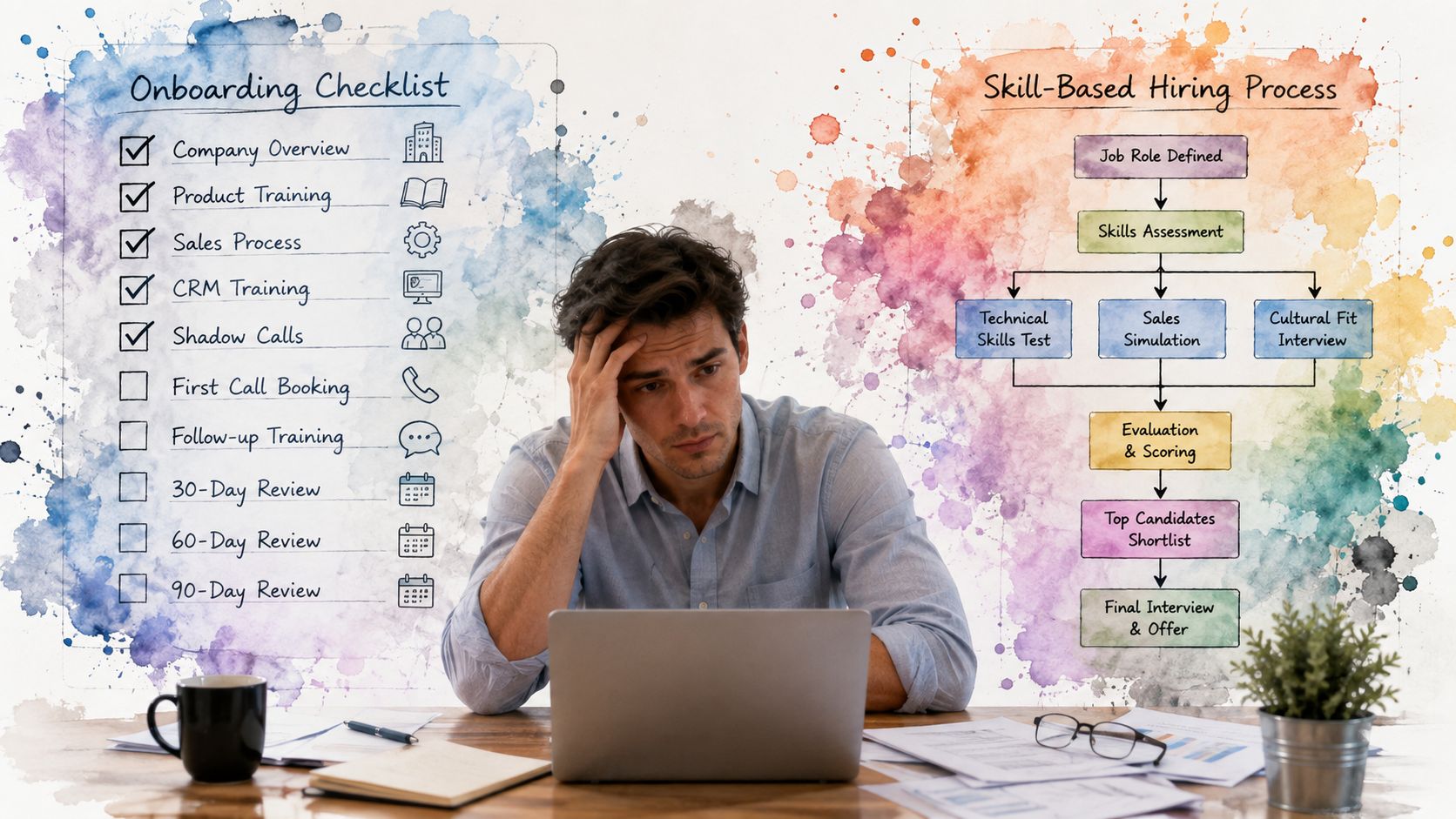
The cleanest fix is consistency. The same roleplay scenario used to assess a candidate should also appear in onboarding and later in coaching. That way the organization is comparing the same behavior, not changing the test every time the person changes status. Shared scenarios reduce guesswork and make ramp conversations much more objective.
The hiring process gets sharper when candidates are scored on observable selling behavior instead of interview polish. That means objection handling, call control, responsiveness, and next-step execution. It also means the candidate can't coast on charisma. A structured evaluator sees what the rep does, not what they sound like.
For a more practical look at onboarding structure, the sales onboarding checklist is useful because it reinforces the idea that ramp should be repeatable, not improvised. And for sourcing and evaluation workflows, Hire SDRs from hireSDR.com fits the same logic. The value is in standardizing how candidates are assessed, especially when distributed teams need comparable evidence.
Stop separating “hiring” from “development”
That split is artificial. If the hiring rubric rewards the same behaviors that live calls require, onboarding becomes a continuation of evaluation instead of a separate universe. The rep learns what the company values, then gets scored on it again in real conversations.
The payoff is simple. Fewer bad hires. Faster ramp. Less manager confusion. The same criteria should travel across the full rep lifecycle, from candidate screen to day ninety call review. If the company won't define what good looks like in one place, it won't improve it anywhere.
Your 30-60-90 Day Sales Improvement Plan
The first month should be about clarity. Define the core behaviors, choose the scenarios, and stand up the practice routine reps can complete. Keep the scope narrow so the team doesn't drown in framework sprawl. The checkpoint at day 30 is simple. The team can name the behaviors, run the drills, and score calls with the same language.
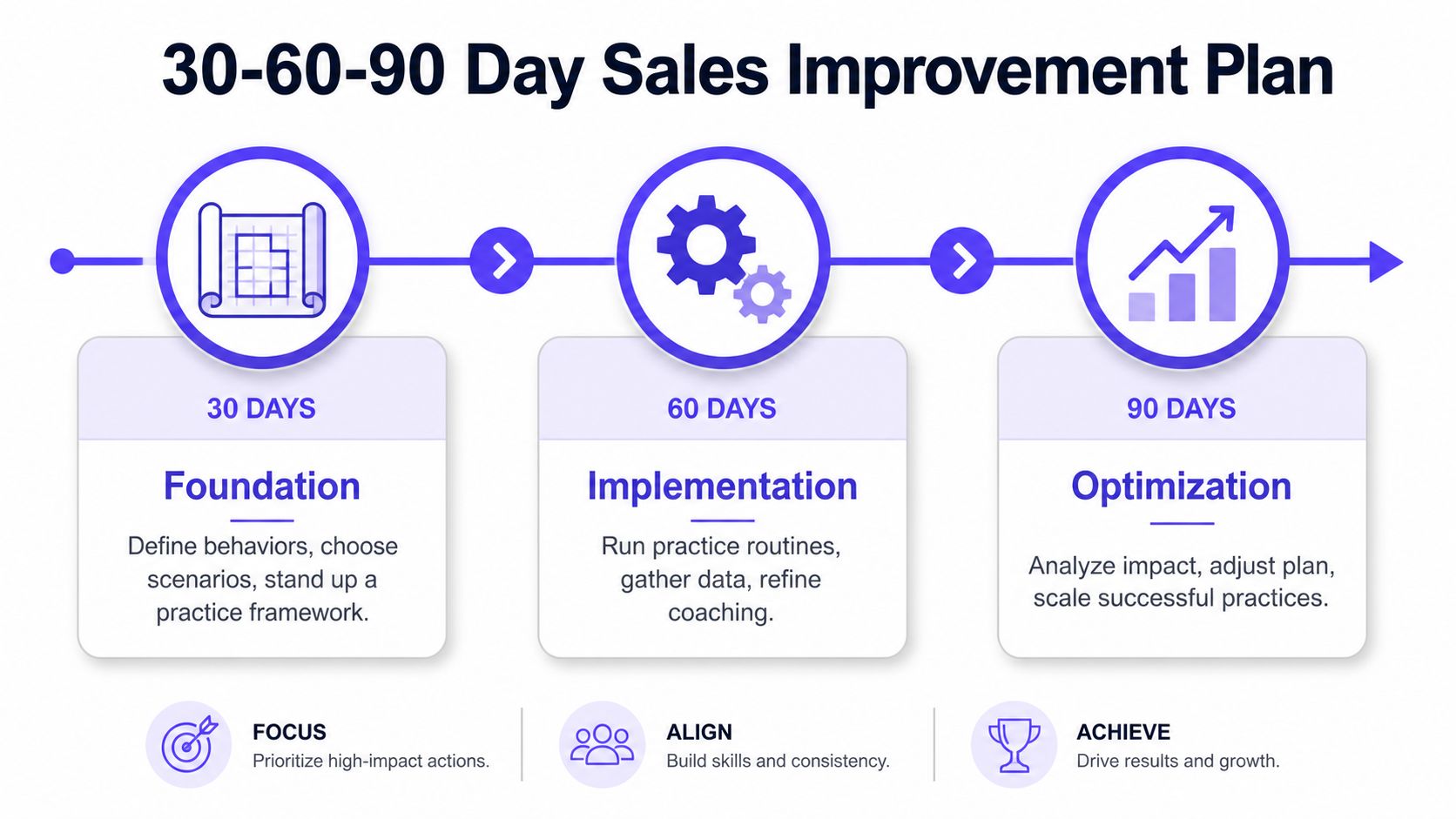
Days 31 to 60 should shift from setup to enforcement. Managers run coaching against the metrics that matter, reps repeat the same scenarios, and onboarding starts using the same tests the team uses for live skills. The checkpoint here is consistency. The organization should be seeing the same language, the same rubric, and fewer random coaching opinions.
Days 61 to 90 is where the system gets sharpened. Candidate assessments use the same criteria as rep development, the strongest scenarios get retained, and weak ones get cut. The checkpoint is adoption. Leaders should be able to tell whether the process is sticking because the behavior shows up in calls, not just in meetings.
Overvue gives sales teams a way to assess and train reps with AI buyer simulations, standardized scoring, and repeatable roleplay scenarios based on real ICP details. If the goal is to make behavior measurable and coaching consistent, visit Overvue and see how a shared assessment and training workflow can support hiring, onboarding, and rep development in one place.