
A rep finishes a discovery call, hears “the budget isn't there,” and reaches for a polished rebuttal that sounds fine but lands flat. The prospect gets quieter, the next-step question feels forced, and the deal drifts into the follow-up pile with every other conversation that looked promising until the first hard objection. That stall is familiar because it's common, and the data backs it up, objections are a normal part of B2B selling, not a rare crisis, which is why a practical guide to navigating sales objections matters long before the close.
What gets missed in a lot of sales training is simple, objections aren't just about words, they're about timing, qualification, and whether the rep can tell the difference between real friction and a polite exit. When teams treat every objection as a dramatic moment to “overcome,” they train improvisation instead of judgment. The better model is more measurable, more candid, and much less theatrical.
The Moment a Sales Call Stalls
The rep has done the basics well. Discovery felt sharp, the buyer was engaged, and then the conversation hit the line every seller hears eventually, “It sounds good, but the price is more than we expected.” The rep smiles, talks faster, and starts stacking features, as if more words will repair the moment.
That's usually where momentum leaks out of the room.
The problem isn't the objection itself. The problem is that too many reps were trained to treat objections in sales as a late-stage hurdle, when they show up throughout the conversation and often appear before the seller has finished qualifying the opportunity. The result is predictable. The rep improvises, the buyer senses strain, and the call stops feeling collaborative.
Practical rule: if a rep sounds surprised by price, timing, or authority, the call probably failed earlier than the objection did.
A better mental model is to treat objections as a recurring signal, not a single event. That changes how discovery is run, how notes are tagged, and how coaching is delivered. It also changes what good looks like on a recorded call, because the best reps don't “win” objections with a clever line, they keep the conversation moving by diagnosing what the buyer is protecting.
There's a good reason to get serious about this. A Gong-based summary reports that the average B2B rep hears 2.4 objections per discovery or demo call, and 64% of deals surface more than one objection before closing, which means the pattern is built into the process, not hanging off the edge of it. For a practical companion to this reality, Salesmotion's objection-handling guidance for sellers fits well beside call review, because it reinforces the idea that objections need method, not panic.
What Counts as an Objection in a Modern Sales Call
A modern objection is any buyer signal that says, “Pause, something still feels unresolved.” It can show up as direct pushback, careful hedging, a request to revisit later, or a vague hesitation that sounds harmless until the opportunity goes cold. The practical reason to define it tightly is simple. Reps and managers need a consistent way to tag what happened on the call, not a loose read based on tone or optimism.
The stronger lens is to treat objections as measurable signals, not as isolated moments. That changes how discovery is run, how call notes are tagged, and how coaching is handled. It also changes what good looks like on a recording, because the best reps do more than answer a concern. They identify what the buyer is protecting and keep the conversation moving.
Explicit objections, hidden objections, and stalls
An explicit objection is easy to hear. The buyer says the price is too high, the timing is wrong, or a competitor feels safer. A hidden objection sits inside a question, like a request for more detail that really reflects uncertainty about implementation, trust, or internal approval. A stall is the softest version, where the buyer avoids commitment without naming the issue.
That distinction matters because the response changes. A stall does not call for a pitch deck dump. A hidden objection usually needs a better question, not a stronger claim. An explicit objection only helps if the rep knows what is underneath it.
Why timing changes the outcome
Timing changes how the objection lands. The same Gong-based summary reports that objections that surface in the first 10 minutes of a call convert at 41%, while objections in the last 10 minutes convert at 10%, a 4.1× difference. That gap points to a real trade-off, early friction often means the buyer is sorting through the fit, while late friction often means the call never built enough conviction.
The point is not to celebrate early resistance. It shows that early objections are often part of the buyer's evaluation process, while late objections usually signal that the seller has not built enough confidence or clarity. The same source also notes that the median time from first objection to deal resolution is 14 days for SMB and 47 days for enterprise, which is a useful reminder that objections often open a cycle, they do not close one.
For teams that want to inspect those patterns at scale, SigOS sales call analysis helps because it focuses on how call data can be reviewed and tagged, which is where objection quality becomes visible instead of anecdotal.
The Seven Categories Every Seller Should Recognize
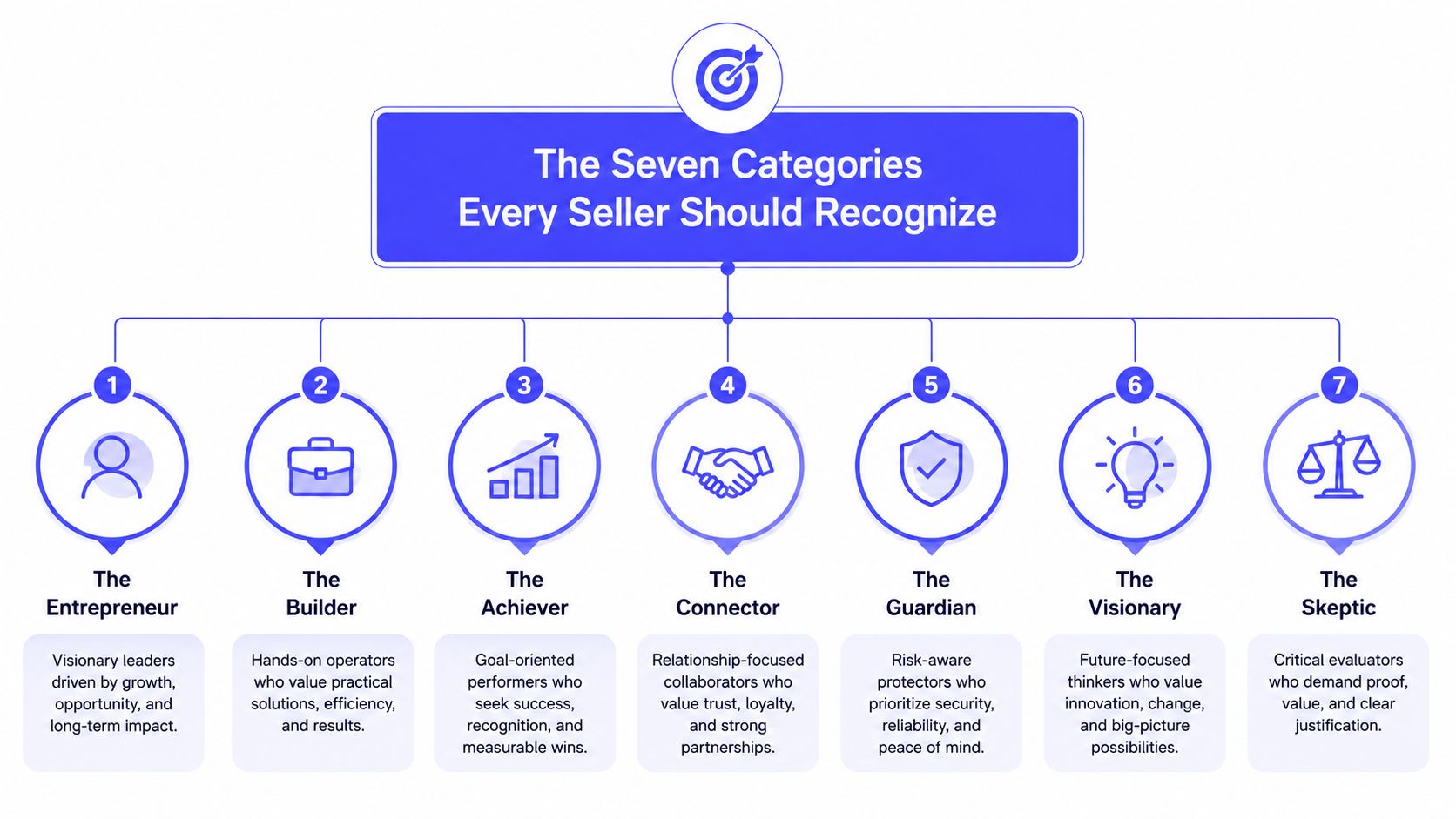
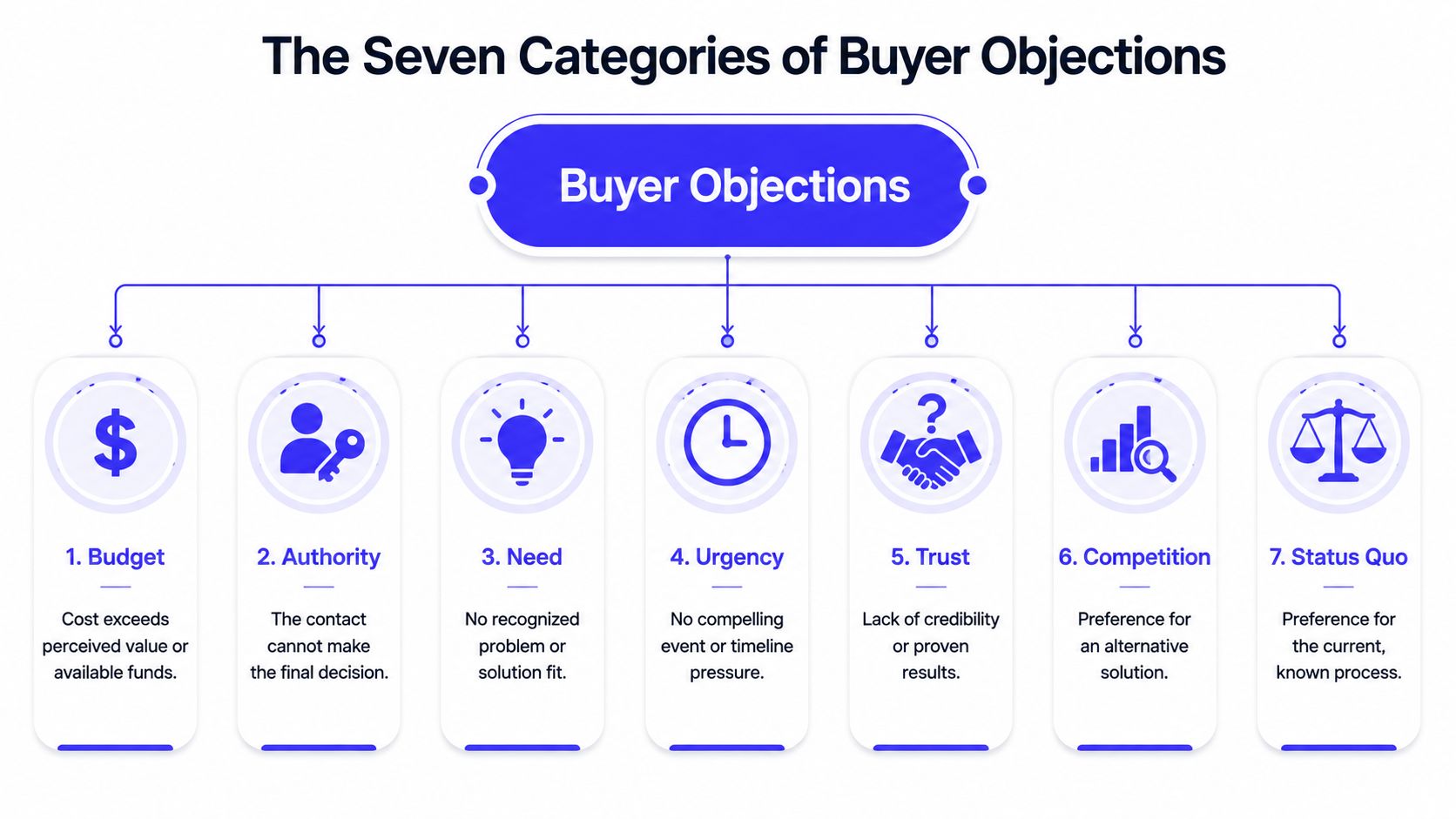
Most objections collapse into seven buckets. That's useful because reps don't need a thousand scripts, they need a fast way to classify what they're hearing and respond to the right underlying risk. The categories are budget, authority, need, urgency, trust, competition, and status quo.
What each category is really protecting
- Budget: “We don't have room for this.” The buyer is protecting against cost that feels larger than the visible value.
- Authority: “I'm not the decision-maker.” The buyer is protecting against overstepping their role or creating internal friction.
- Need: “We're fine as we are.” The buyer is protecting against solving a problem they don't yet agree exists.
- Urgency: “Not this quarter.” The buyer is protecting current priorities and avoiding disruption.
- Trust: “I'm not convinced yet.” The buyer is protecting against risk, credibility gaps, or weak proof.
- Competition: “We already have another option.” The buyer is protecting the comfort of a known alternative.
- Status quo: “Why change at all?” The buyer is protecting the current process, even if it's imperfect.
A rep who can place the objection in one of these bins is already ahead of the average call. The response gets sharper because the seller stops debating the wording and starts addressing the risk. A “too expensive” comment gets one treatment, but a status quo objection often needs proof that the current workflow is already costing the buyer in hidden ways.
The bucket also suggests when the objection is likely to surface. Budget and trust often show up once value is visible but not yet believed. Authority usually shows up when the rep is talking to the wrong person. Need and urgency appear earlier, because they're tied to whether the buyer sees the problem as real enough to act on.
A rep doesn't need to label the objection out loud. The rep does need to know which risk the buyer is trying to reduce.
When an Objection Is Actually a Disqualification Signal
Some objections are real. Some are a polite way to say the deal should never have been in the pipeline.
A buyer who suddenly “has no budget,” can't identify a decision-maker, or keeps moving the timeline is often not objecting to the offer, they're revealing a gap that discovery failed to uncover. That's the part most objection content skips. It trains sellers to keep pushing, even when the right move is to admit the opportunity was underqualified.
A quick diagnostic for the rep
Before trying to overcome the objection, check three things.
- Was the pain real enough to justify change? If the buyer can't describe an actual problem, the objection may be a symptom of weak need.
- Was the decision path mapped early? If authority appears late, the rep may have been selling to the wrong contact from the start.
- Was timing tested against a real event? If “later” keeps replacing a concrete date or trigger, urgency was never established.
Discipline matters more than enthusiasm. Sellers who keep all deals alive look busy, but they also create noise in the pipeline. A cleaner approach is to distinguish between a workable objection and a disqualification signal, then say so clearly in coaching notes.
The same nuance shows up in the broader sales literature on buyer committees and complex decision processes, where objections often reflect internal alignment work rather than a simple no. That means a rep shouldn't treat every pushback as a persuasion problem. Sometimes the call needs another stakeholder. Sometimes it needs a tighter qualification pass. Sometimes it needs to stop.
Generic objection handling content usually avoids that conclusion because it sounds harsh. In practice, it saves time, improves forecast quality, and keeps managers from celebrating deals that were never moving.
A Repeatable Framework for Responding Under Pressure
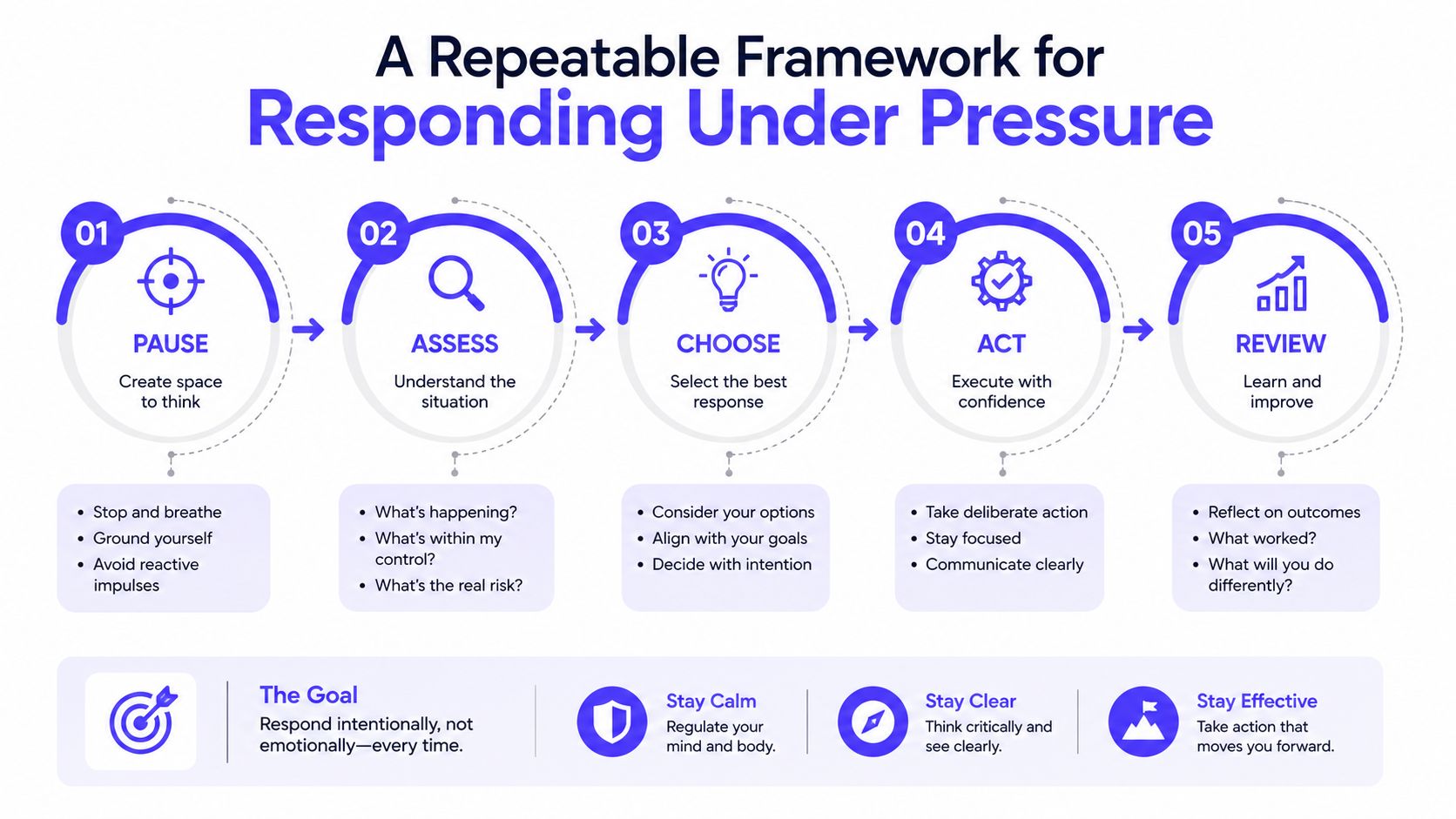
The most usable framework is LAER, listen, acknowledge, explore, respond. It works because it forces the rep to slow down before trying to prove anything. That pause matters. Reps who jump straight into defense usually answer the wrong question.
How LAER works in real conversations
Listen means letting the buyer finish without interruption. Not half-listening while preparing a counterpoint, listening for the risk beneath the words. Acknowledge is a concise recognition of what the buyer said, which lowers tension without agreeing to a bad premise.
Explore is where weak reps often rush. Strong reps ask a question that narrows the issue, not a question that opens a new lecture. A price objection may need a comparison baseline. A timing objection may need a trigger event. A trust objection may need a proof source, a reference point, or a call with a specialist.
Respond comes last, and it should be specific. That can mean a reframe, a proof point, or a short explanation tied to the buyer's stated risk. The response should sound like it belongs in the current call, not in a canned playbook.
When to use supporting moves
Feel-felt-found works best when the buyer's objection is emotional or familiar. It's weaker when the buyer wants evidence, because empathy alone doesn't fix a missing use case or an unresolved implementation worry. Isolation questions are helpful when the rep suspects the objection is the only thing left in the way. A question like, “If we could solve that point, would anything else block the decision?” can reveal whether the issue is real or just one piece of a larger stall.
Reframe to value is useful when the objection is a price, competition, or status quo issue. The rep should shift the conversation from cost to consequence, or from feature comparison to business risk. That move fails when it's used too early, before the buyer has agreed that the issue matters.
For teams building repeatable coaching, the internal program at Overvue's AI sales training is one example of how this can be practiced in a controlled environment. The point is not the brand name, it's the format, reps need repetition against structured buyer reactions before the stakes are real.
Three Objection Scripts You Can Actually Use on a Call
Script quality matters, but only after the rep has the right diagnosis. A good script sounds natural because it's doing three things at once, acknowledging the concern, testing the underlying issue, and guiding the next step without sounding desperate. The worst scripts try to sound clever. The best ones sound calm.
Price, timing, and competitor responses
Price objection.
“Fair point. When you say it's expensive, is that compared with budget, compared with another tool, or compared with the value you expected from this problem?”
That question matters because it separates a true budget constraint from a value problem. If the buyer says the spend is the issue, the rep can talk about trade-offs and prioritize use cases. If the buyer says the value feels thin, the rep needs a sharper proof point, not a discount reflex.
Timing objection.
“That makes sense. What has to happen for this to become a priority, and is there a business event tied to that timing?”
This keeps the call grounded in conditions, not vibes. If there's a real trigger, the rep can map next steps to it. If there isn't one, the rep should hear that as a qualification issue, not a scheduling issue.
Competitor objection.
“That helps. What's working well with them, and where are you still carrying the friction?”
This keeps the seller from attacking the rival tool, which usually makes the buyer defensive. It also surfaces the gap the current vendor isn't covering. The next move is not to declare victory. It's to compare the exact problem the buyer is still trying to solve.
The right script doesn't win the objection by force. It earns enough clarity for the buyer to keep talking.
These responses work because they're diagnostic first. They don't treat the objection as an interruption. They treat it as a branch point that tells the seller whether to prove more, qualify harder, or move on.
Roleplay Scenarios That Build Real Objection Skill
Most sellers don't fail because they never heard a framework. They fail because they haven't rehearsed it under pressure. Roleplay closes that gap when the scenario mirrors the actual market, the actual persona, and the actual objections a rep will face on a live call.
What a useful scenario needs
A realistic roleplay should include the buyer's role, company context, known pains, likely competitors, and the specific objections the team keeps hearing. Without those details, practice becomes generic banter. With them, the rep has to decide whether to probe budget, confirm authority, or reframe value in real time.
The scenario should also be repeatable. If every manager plays the buyer differently, the feedback becomes inconsistent and the rep learns to perform for the interviewer instead of selling the problem. Standardized scenarios make coaching comparable across candidates, new hires, and different teams.
How AI changes the practice loop
AI simulators make objection work more usable because they remove scheduling friction and keep the buyer behavior consistent from one run to the next. Platforms like Overvue's cold call roleplay tools support this kind of repetition with AI buyers, objection sets, and scoring against criteria such as objection handling, call control, responsiveness, and next-step execution. That matters because managers can compare sessions side by side instead of relying on subjective recollection.
A strong practice loop includes three elements:
- Defined scenarios: specific personas, pains, and competitors.
- Scoring rubrics: consistent criteria for the objection response and next-step discipline.
- Repetition with feedback: enough attempts for the rep to adjust language, pacing, and questions.
Daily challenges, leaderboards, and team analytics are useful only when they reinforce a real skill. Otherwise, they turn practice into a vanity exercise. The useful version pushes reps to respond more clearly, not just faster.
Measuring Objection Handling Across the Team
What gets measured gets coached. If objection handling never makes it onto the team scorecard, it stays a soft skill managers mention in pipeline reviews and then set aside when the quarter gets busy.
Metrics that show progress
The first number to watch is objection-to-next-step conversion. It shows whether a rep can move the call forward after pushback, which is the point of the skill. A second metric is time from first objection to resolution, because long gaps often point to confusion, weak follow-up, or a buyer who was never engaged in the first place.
Segmentation matters too. Budget-heavy calls may need stronger value proof. Authority-heavy calls may need earlier stakeholder mapping. Trust-heavy calls may need better evidence or tighter technical alignment. Ramp time on objection-heavy segments is worth tracking as well, because new hires usually need more rehearsal on the objections they hear most.
What to do with the data
If the same objection keeps breaking calls, the response depends on where the failure sits. When a few reps struggle, coaching and roleplay usually solve more than another pep talk. When the pattern shows up across the team, the issue is often qualification, messaging, or ICP definition.
That's where assessment tools help. Overvue's sales assessment tools support standardized evaluation, which makes it easier to compare candidates and see whether someone can handle pressure before they are in live pipeline. The same standard should carry into coaching after hiring, so practice and assessment use the same criteria.
A simple 30-day checklist keeps the work honest, run it, review it, then coach against it.
- Tag objections consistently: Use the same taxonomy across calls.
- Review the losing patterns: Look for repeats, not anecdotes.
- Test one response per week: Keep changes small enough to evaluate.
- Separate training from qualification: Do not coach away a deal that should be disqualified.
That is the edge. Teams do not need more objection theater. They need cleaner diagnosis, better rehearsal, and a scorecard that tells the truth.