

Last updated: March 2026
Creating a highly effective sales team starts long before a new representative makes their first call; it begins with rigorous, objective evaluation during the interview process. Whether you rely on a traditional sales assessment test or a modern AI-powered sales aptitude test, this guide shows sales leaders how to master the interview scorecard, moving your hiring from subjective gut feelings to a data-driven science that consistently identifies top performers. For example, when assessing sales talent for an enterprise role requires evaluating...
You will learn to establish clear rating scales tied directly to essential job behaviors, construct customized scoring frameworks for roles like SDRs and AEs, and map strategic interview questions to specific competencies. Furthermore, we detail the necessary mechanics for aggregating and weighting results to resolve interviewer conflicts fairly, ensuring every hire reflects your organization's true needs.
Begin mastering this critical hiring tool by establishing a universal foundation for objective measurement.
Understanding the Sales Interview Scorecard
What is a Sales Interview Scorecard?
A sales interview scorecard is a standardized evaluation tool used to measure a candidate's skills against the specific requirements of a sales role. Instead of relying on a general impression, interviewers use this document to rate predefined competencies such as objection handling, discovery techniques, and cultural alignment.
By using a consistent rubric, your hiring team can move away from subjective "gut feelings" and toward a data-backed hiring process. This ensures that every candidate is evaluated on the same playing field, regardless of which manager conducts the interview.
Why Use a Scorecard for Sales Interviews?
Implementing a scorecard system transforms the hiring process from a guessing game into a repeatable science. Research into Structured interviews and predictive validity research suggests that structured evaluations are significantly more effective at predicting future job performance than unstructured conversations.
Key benefits of using a sales interview scorecard include:
- Improved Objectivity: It forces interviewers to justify their ratings based on specific evidence rather than vague "vibes."
- Team Alignment: Ensures everyone involved in the hiring process agrees on what "excellent" looks like for each sales competency.
- Efficient Debriefs: Speeds up the decision-making process by providing a clear, numerical comparison between different candidates.
- Legal Compliance: Provides a documented, evidence-based trail of why a candidate was or was not selected for the role.
- Better Candidate Experience: Demonstrates a professional, organized hiring process that focuses on merit and skill.

Reducing Hiring Bias Through Objective Scoring
Cognitive bias is one of the biggest hurdles in sales recruiting. Hiring managers are naturally prone to affinity bias (hiring people similar to themselves) and the halo effect (allowing one positive trait to overshadow major skill gaps).
A scorecard acts as a "circuit breaker" for these mental shortcuts. By requiring a score for distinct skills—like CRM proficiency or closing ability—it forces the brain to analyze facts rather than feelings. This objective approach ensures you hire the best sales talent based on performance potential rather than personality alone. When paired with dedicated AI sales assessment tools, scorecards become even more powerful. Using Overvue's sales skills assessment test, hiring managers can access quantifiable data that eliminates guesswork from your sales candidate assessment process.
Standardizing Evaluation: Common Rating Scales and Rubrics
To eliminate subjectivity from the hiring process, your sales interview scorecard must rely on standardized evaluation methods. Without a consistent scale, one interviewer's "4 out of 5" might be another interviewer's "2 out of 5," leading to disjointed hiring decisions and missed talent. By implementing clear rubrics and defined rating scales, you ensure that every candidate is measured against the same objective yardstick.
Numeric vs. Descriptive Rating Scales
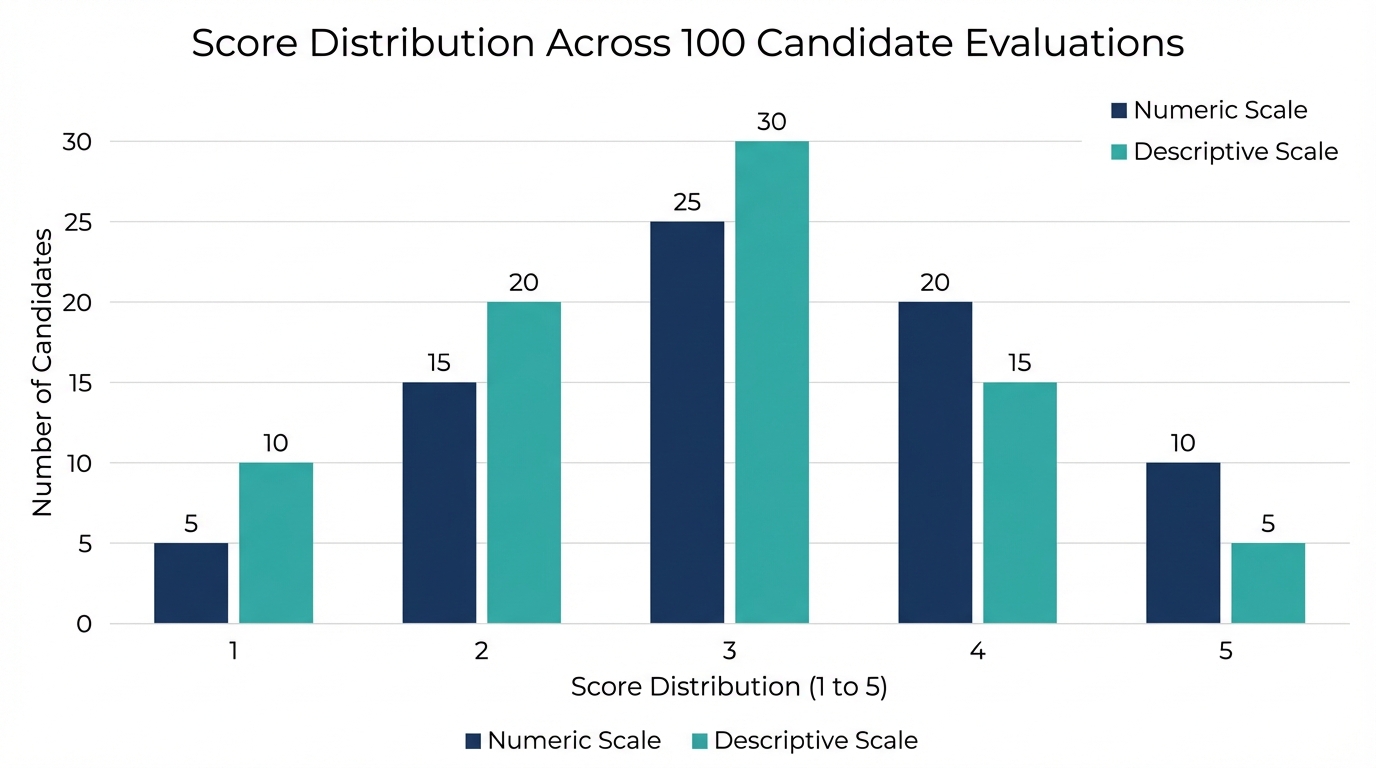
Choosing the right scale is a balance between granularity and ease of use. While numeric scales offer more mathematical precision for data analysis, descriptive scales often lead to higher inter-rater reliability because they provide more context for the evaluator.
| Feature | 1-5 Numeric Scale | 3-Level Descriptive Scale |
|---|---|---|
| Granularity | High; allows for fine distinctions between top candidates. | Low; focuses on broad competency milestones. |
| Ease of Calibration | Difficult; interviewers often struggle to define the difference between a 3 and a 4. | High; clear definitions make it easier for teams to agree. |
| Best Used For | Large-scale hiring where statistical data is prioritized. | Small to mid-sized teams prioritizing consistency. |
| Examples | 1 (Poor) to 5 (Outstanding) | Developing, Proficient, Exemplary |
| Common Pitfall | "Central Tendency Bias" (scoring everyone a 3). | Lack of nuance for distinguishing high-potentials. |
Creating Clear Behavioral Anchors and Rubrics
A rubric is only effective if it includes Behaviorally Anchored Rating Scales (BARS). These are specific examples of what a candidate says or does that corresponds to a specific score. For example, instead of simply rating "Objection Handling," a rubric should define what "Proficient" looks like (e.g., "Acknowledges the objection, asks a clarifying question, and pivots back to value").
When building your rubrics, focus on observable actions. This is where AI sales assessments provide a significant advantage; they can objectively track whether a candidate used specific techniques, such as empathetic listening or structured discovery, which are often missed by human interviewers during live roleplays. The best sales assessment tools combine rubric scoring with AI analysis to surface patterns that even experienced interviewers miss.

Tying Criteria to Job Competencies and Requirements
Standardization is meaningless if you are measuring the wrong traits. To ensure your scorecard accurately predicts success, you must map every evaluation criterion back to the specific requirements of the role.
-
Define Core Competencies for the Specific Role:
Start by identifying the 5–7 competencies that drive success in your specific sales environment. For an SDR, this might include resilience and high-volume outreach; for an Enterprise AE, it might focus on strategic discovery and multi-stakeholder management. Avoid generic "good at sales" labels in favor of functional skills.
-
Align Scorecard Sections with Job Responsibilities:
Structure your scorecard to mirror the candidate's future daily workflow. If the job requires heavy cold calling, include a dedicated section for cold call roleplay performance. Each section of the scorecard should have a direct correlation to a line item in the job description, ensuring you aren't over-indexing on personality over skill.
-
Calibrate Scores Against Top Performers:
Use your current high-performing reps as a benchmark for what an "Exemplary" score looks like. If your top earners consistently demonstrate a specific discovery framework, build that framework into your rubric. This alignment ensures that your sales interview scorecard identifies candidates who possess the same "DNA" as your most successful employees.
Step-by-Step: Building a Customized Sales Scorecard
Creating a structured evaluation process is the most effective way to remove gut-feeling bias from your hiring. A well-designed sales interview scorecard provides a roadmap for interviewers, ensuring every candidate is measured against the same objective standards.
5 Steps to Building Your First Sales Scorecard
- Define Role-Specific Competencies: Start by identifying the specific hard and soft skills required for the role. For an SDR, this might include objection handling and high-volume outreach, while an AE scorecard might focus on discovery techniques and multi-stakeholder negotiation.
- Assign Weighted Values: Not all skills are created equal. Assign a weight to each competency based on its impact on job performance. If coachability is your primary predictor of success, it should carry more weight in the final score than a candidate's specific CRM experience.
- Develop Clear Rating Definitions: To prevent "rating drift" among different interviewers, define what a 1, 3, or 5 looks like for every attribute. For example, a "5" in communication might require the candidate to use concise language and active listening cues throughout the entire sales hiring assessment.
- Design the Interview Flow: Organize your scorecard to mirror the natural progression of the conversation. Grouping questions by category—such as "Product Knowledge" or "Resilience"—helps the interviewer maintain a logical flow while capturing data in real-time.
- Pilot and Refine: Before rolling the scorecard out to the entire department, test it with your top-performing sales reps. If your current "A-players" wouldn't pass your new scorecard, your criteria likely need adjustment to reflect the realities of your specific sales environment.
Determining the Ideal Number of Criteria
Industry standards from hiring leaders like Greenhouse suggest that the "sweet spot" for a scorecard is between 6 and 12 attributes per category. Exceeding this range often leads to "scorecard fatigue," where interviewers provide less detailed feedback as they struggle to keep up with an overwhelming checklist. By limiting the criteria to a focused set of high-impact competencies, you ensure that interviewers have enough time to dig deep into each response, resulting in more accurate and actionable data.
Incorporating 'Cultural Add' Without Bias
To build a more resilient and innovative sales organization, teams must shift their focus from "culture fit" to "cultural add." While culture fit often relies on subjective likability—which can inadvertently lead to a homogenous team—cultural add is a logic-driven approach aimed at expanding the team's collective capabilities. This involves identifying specific perspectives, experiences, or cognitive styles currently missing from the organization. For instance, if your team is comprised of aggressive "hunters," a candidate who brings a high-empathy, consultative approach adds a new dimension to your problem-solving capacity. By defining these "adds" as objective business needs rather than personality preferences, you can diversify your team's strengths while significantly reducing affinity bias during the candidate evaluation process.
Role-Specific Competencies: SDRs, AEs, and Industry Nuances
A "one-size-fits-all" sales interview scorecard often leads to hiring the right person for the wrong role. The traits required to thrive in high-volume prospecting are fundamentally different from those needed to navigate a 12-month enterprise closing cycle. While a sales personality test can reveal behavioral tendencies and a sales skills assessment can measure technical ability, your scorecard must combine both dimensions to reflect the specific DNA of the role and ensure high hiring accuracy.
SDR vs. AE Scorecard Priorities
While all sales roles require core communication skills, the weighting of competencies shifts based on the position in the funnel. Use the following breakdown to adjust your evaluation criteria:
| Competency | SDR / BDR Focus | Account Executive (AE) Focus | Account Manager (AM) Focus |
|---|---|---|---|
| Resilience | High: Ability to handle 50+ rejections daily. | Moderate: Resilience against losing long-term deals. | Low/Moderate: Focus is on maintaining rapport. |
| Discovery | Basic: Identifying pain points and BANT/MEDDIC criteria. | Advanced: Deep business acumen and uncovering "hidden" stakeholders. | Strategic: Identifying upsell opportunities and potential churn risks. |
| Closing | Meeting-Centric: Selling the "next step" or the demo. | Revenue-Centric: Negotiating contracts and navigating legal/procurement. | Retention-Centric: Securing renewals and expanding seat count. |
| Research | Volume-Based: Quick identification of triggers across many accounts. | Quality-Based: Deep dives into annual reports and strategic initiatives. | Relationship-Based: Tracking organizational changes and internal politics. |
Inside Sales vs. Outside Sales Competencies
The distinction between Inside Sales and Outside Sales is often ignored in scorecards, yet the environments require distinct skill sets.
Inside Sales roles prioritize digital fluency and high-velocity communication. These reps must master "remote rapport," using video presence and data-driven tools to build trust without a handshake. Their scorecard should weigh CRM hygiene, short-form writing skills, and technical proficiency heavily.
In contrast, Outside Sales (Field Sales) relies on autonomy and territory management. Because they operate with less direct supervision, their scorecard must emphasize self-motivation and strategic travel planning. Outside reps are evaluated on their ability to command a room physically, read non-verbal cues in person, and sustain long-term relationships through face-to-face interaction.
SaaS AE vs. Retail Sales: Key Differences
- SaaS AE: Success is defined by consultative selling, managing multi-stakeholder complexity, and understanding recurring revenue models.
- Retail Sales: Success is defined by immediacy, high-volume transactional closing, and an "always-on" service mindset for walk-in traffic.
Building a Competency Dictionary Tied to Company Value
To make your sales interview scorecard culturally relevant, you must map your role-specific competencies back to your core company values. This ensures you aren't just hiring for skill, but for cultural alignment.
How to map competencies to values:
- Identify the Value: Start with a core pillar (e.g., "Customer First").
- Define the Behavioral Competency: What does this value look like in a sales context? For "Customer First," the competency is Consultative Discovery.
- Create the Dictionary Entry: Define the expected behavior. Example: "The candidate does not pitch features; they ask open-ended questions to ensure the solution genuinely solves the prospect's problem."
- Assign to Scorecard: Add a dedicated section to the scorecard labeled "Value Alignment," where the interviewer rates the candidate on this specific behavior during a simulated roleplay.

By formalizing this dictionary, you ensure that every interviewer uses the same language to describe "fit," removing the subjectivity that often leads to biased hiring decisions.
Mapping Strategic Questions to Scorecard Criteria
To build an effective sales interview scorecard, you must move beyond generic inquiries and map specific questions to the core competencies required for the role. By aligning your questions with your scorecard's criteria, you ensure every minute of the interview provides actionable data on a candidate's potential.
Questions for Prospecting and Pipeline Generation
Prospecting is the engine of any sales organization. Use these questions to evaluate a candidate's ability to identify opportunities and initiate the sales cycle:
- "Walk me through your process for identifying high-value leads within a new territory. What tools and signals do you prioritize?" (Criteria: Strategic Targeting)
- "Tell me about a time you faced a high volume of rejection during an outbound campaign. How did you adjust your approach to maintain your pipeline?" (Criteria: Persistence & Resilience)
- "How do you personalize your outreach at scale without sacrificing quality?" (Criteria: Efficiency & Personalization)
- "Describe a scenario where you had to break into a 'must-win' account that had gone cold. What was your multi-channel strategy?" (Criteria: Creative Problem Solving)
Assessing Closing and Negotiation Skills
Evaluating a candidate's ability to cross the finish line requires understanding their tactical approach to objection handling and deal structure.
- "Describe the most complex deal you've closed. Who were the stakeholders, and how did you navigate the internal politics of the buying committee?" (Criteria: Stakeholder Management)
- "When a prospect tells you your price is too high compared to a competitor, what is your immediate framework for defending value?" (Criteria: Value-Based Selling)
- "Give me an example of a deal you lost at the final stage. What did you learn, and what would you do differently today?" (Criteria: Self-Awareness & Analysis)
- "How do you create a sense of urgency in a long sales cycle without appearing desperate or pushy?" (Criteria: Closing Velocity)
Evaluating Coachability and Resilience
In the fast-paced world of tech and SaaS, the ability to adapt is often more important than existing product knowledge. Use these questions to find "A-players" who are lifelong learners:
- "What is the most difficult piece of feedback you've received from a manager, and how did you implement it in your next three calls?" (Criteria: Coachability)
- "Describe a time you failed to meet your quota. How did you diagnose the issue, and what steps did you take to recover the following quarter?" (Criteria: Resilience)
- "What is a new sales skill or methodology you've taught yourself in the last six months?" (Criteria: Continuous Improvement)
Behavioral vs. Situational Questions on a Scorecard
A balanced scorecard utilizes both behavioral and situational questions to provide a 360-degree view of the candidate. Behavioral questions look at past actions as predictors of future performance, while situational questions test immediate logic and hypothetical problem-solving.
| Question Type | Focus | Purpose on Scorecard | Example |
|---|---|---|---|
| Behavioral | Past Performance | To verify proven experience and cultural fit based on actual history. | "Tell me about a time you handled a difficult customer..." |
| Situational | Future Potential | To assess critical thinking and alignment with your specific sales process. | "If a prospect stops responding after the demo, how would you re-engage them?" |

Assessing Communication and Storytelling Skills
Beyond the technicalities of a CRM or a script, top-tier sales professionals are master storytellers. During the interview, evaluate how the candidate structures their answers. Are they concise, or do they ramble? Do they use the STAR method (Situation, Task, Action, Result) effectively? A candidate who cannot sell their own career story will likely struggle to articulate your product's value proposition to a skeptical buyer. Use a dedicated section on your sales interview scorecard to rate their "executive presence"—the ability to command a room and simplify complex ideas into compelling narratives. For more on refining your evaluation process, explore our comprehensive guide to AI sales assessments.
Scoring Mechanics: Aggregation, Weighting, and Conflicts
Converting subjective interview impressions into objective data requires a structured mathematical approach. Without a defined scoring mechanic, even the most detailed sales interview scorecard can fall victim to "recency bias" or the "halo effect," where one positive trait overshadows significant red flags.
Converting Qualitative Answers to Quantitative Scores
To turn qualitative observations into quantitative data, every interviewer must map candidate responses to a predefined rating scale. Instead of recording "they seemed confident," the evaluator must look at specific indicators within the rubric.
- Define the Anchor: For every competency (e.g., "Handling Objections"), define what a 1, 3, and 5 look like in practice.
- Evidence-Based Scoring: Evaluators should write down the specific quote or action that justifies the score.
- Real-Time Data Entry: Scores should be entered immediately after the interview to ensure accuracy and prevent memory decay.

Weighting Competencies Based on Role Priority
Not every skill on your scorecard carries the same weight. For an Account Executive (AE), "Closing Ability" is critical, while for a Sales Development Representative (SDR), "Resilience" and "High-Volume Prospecting" take precedence. Weighting ensures that your final score reflects the specific needs of the territory and role.
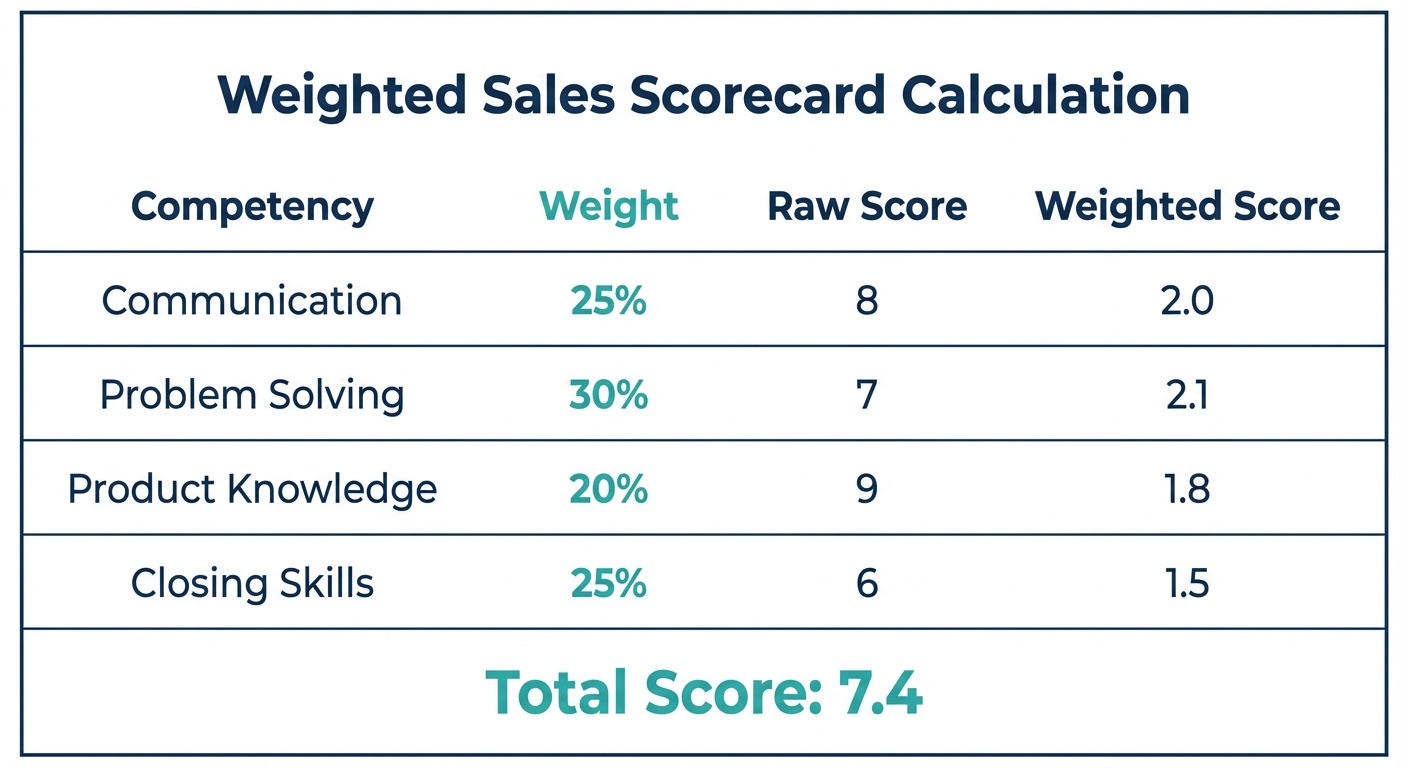
To calculate the final score, assign a percentage weight to each category, ensuring the total equals 100%. Multiply the raw score by the weight to find the weighted value.
Sample Calculation for an SDR Candidate:
- Competency: Prospecting Grit (Weight: 40%) | Score: 4 | Weighted Score: 1.6
- Competency: Coachability (Weight: 30%) | Score: 5 | Weighted Score: 1.5
- Competency: Product Knowledge (Weight: 20%) | Score: 3 | Weighted Score: 0.6
- Competency: Cultural Add (Weight: 10%) | Score: 4 | Weighted Score: 0.4
- Final Aggregated Score: 4.1 / 5.0
Aggregating Team Scores and Resolving Conflicts
When multiple stakeholders interview a candidate, scores will inevitably diverge. A high-performing sales organization doesn't just average these numbers; it uses the delta to uncover hidden risks. Use this step-by-step guide to resolve scoring conflicts:
- Identify Outliers: Look for competencies where one interviewer scored a 2 and another scored a 5.
- Review the Evidence: Ask both interviewers to provide the specific evidence or "behavioral proof" from the interview that led to their score.
- Identify "Deal-Breakers": Determine if a low score in one area (e.g., integrity or coachability) is a non-negotiable "hard no," regardless of how high the other scores are.
- The Weighted Consensus: If the conflict persists, give more weight to the score provided by the direct hiring manager or the person most experienced in that specific functional area.
- Leverage AI Audits: Use AI sales assessments to provide a neutral, third-party data point that acts as the "tie-breaker" when human intuition is split.
Informing Reference Checks with Scorecard Data
The scorecard shouldn't just be used for the "hire/no-hire" decision; it should serve as the blueprint for your reference checks. If a candidate scored low on "Time Management" but high on "Closing," use your reference calls to ask specific, pointed questions about how they managed their pipeline and organized their daily outreach. This turns the scorecard into a long-term sales training and development tool.
Structured Interviewing Techniques for Sales
To move beyond "gut feel" hiring, sales leaders must implement a structured interviewing framework. This ensures that every candidate is evaluated against the same benchmarks, reducing bias and increasing the predictability of high-performance hires.
Scripting Follow-up Probes Linked to Competencies
A common mistake in sales interviews is accepting surface-level answers. To truly uncover a candidate's behavioral DNA, interviewers must use scripted follow-up probes that target specific sales competencies.
| Competency | Initial Question | High-Impact Follow-up Probe |
|---|---|---|
| Resilience | "Tell me about a deal you lost." | "What specifically did you change in your sales cadence or strategy for the next prospect based on that loss?" |
| Discovery Skills | "How do you qualify a lead?" | "Walk me through the last time you walked away from a prospect. What red flags did your discovery process reveal?" |
| Objection Handling | "How do you handle 'not interested'?" | "Can you replicate the exact dialogue you used to pivot that objection into a discovery session?" |
Managing Interview Duration and Panel Sizes
Short Fact: The optimal sales interview panel consists of 2 to 3 people and lasts no longer than 60 minutes. Larger panels lead to "groupthink" and candidate fatigue, while sessions over an hour typically yield diminishing returns on data quality.
Scoring Live Sales Role-Plays and Case Studies
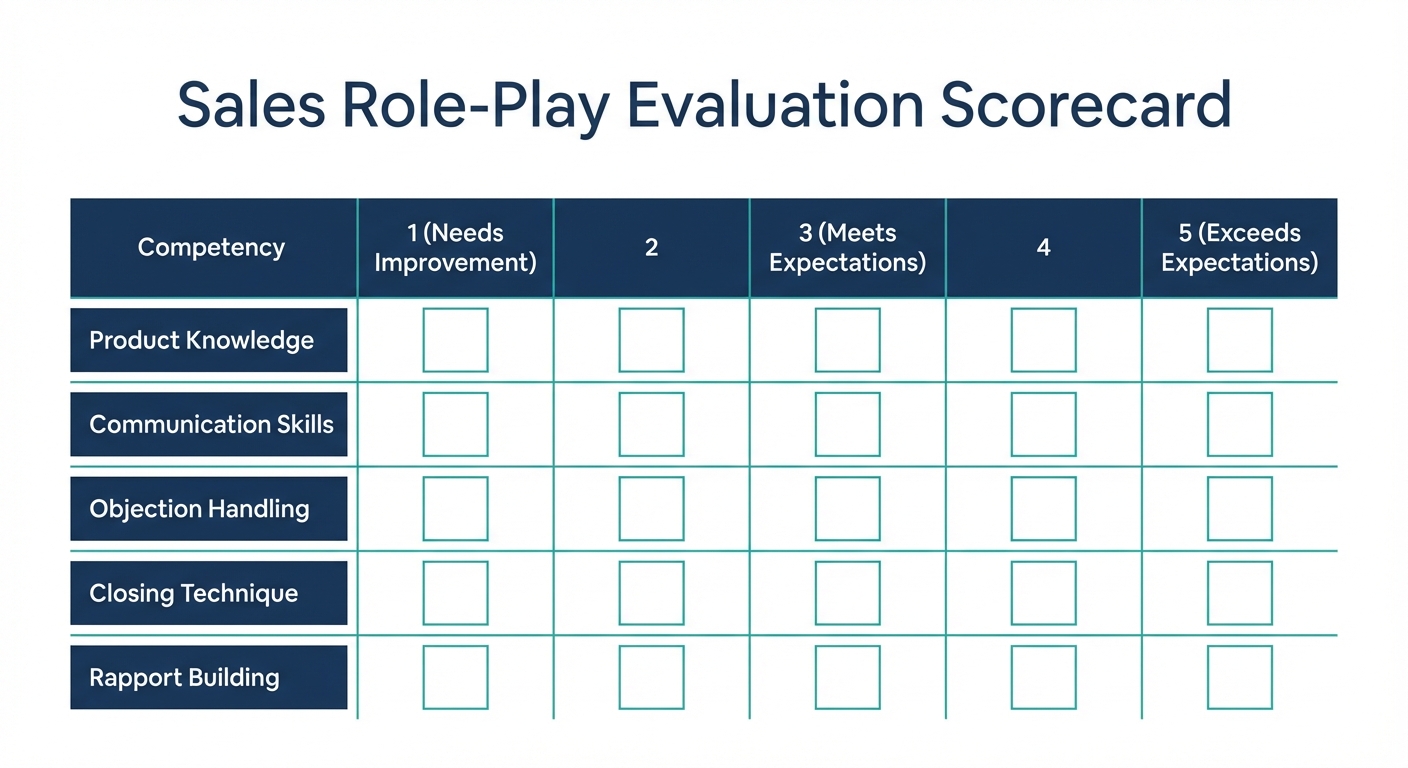
The live role-play is the "stress test" of any sales interview. To standardize evaluation, use a 1-5 Likert scale specifically tailored to the nuances of a discovery call or product demo. Avoid grading on "personality"; instead, score based on the execution of specific sales milestones.
- Score 1 (Poor): Fails to establish rapport; misses obvious pain points; provides a "feature dump" without context.
- Score 2 (Below Average): Identifies pain but fails to quantify it; struggles with basic objection handling; lacks a clear call to action.
- Score 3 (Average): Follows the standard script; uncovers basic needs; handles common objections but lacks value proposition depth.
- Score 4 (Above Average): Demonstrates strong active listening; links product features to specific business outcomes; manages the clock effectively.
- Score 5 (Outstanding): Controls the conversation; creates urgency; handles complex multi-stakeholder objections; effectively "closes" for the next step in the sales cycle.
Assessing Product and Solution Knowledge
While you can teach a product, you cannot easily teach learning agility. During the interview, provide the candidate with a brief, one-page brief on a specific solution and ask them to pitch it back to you ten minutes later. Evaluate how quickly they grasp the ICP (Ideal Customer Profile) and whether they can translate technical specifications into business value. A candidate who can distill complex solutions into simple, benefit-driven language is far more likely to hit their quota early in their tenure.
Calibration and Post-Hire Optimization
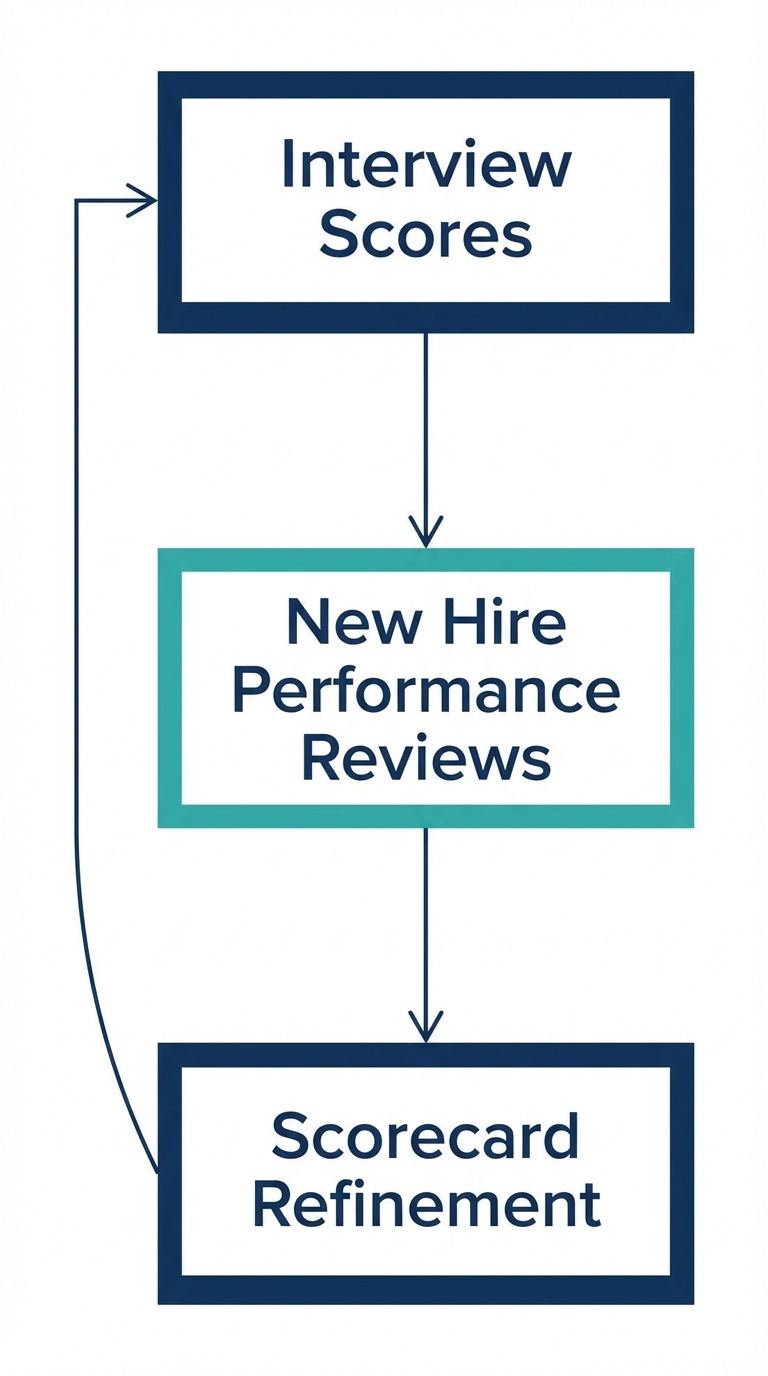
A sales interview scorecard is not a static document; it is a live instrument that requires regular tuning to ensure it accurately predicts success. Calibration ensures that every interviewer defines "excellence" the same way, while post-hire optimization closes the loop between recruitment data and on-ground performance.
Piloting Your Scorecard and Training Interviewers
Before rolling out a scorecard across the entire department, run a pilot program with a small group of seasoned managers. Conduct "mock" evaluations or review recordings of past interviews to test for inter-rater reliability. If three different managers watch the same interview and provide vastly different scores for "Discovery Skills," your rubric is too vague.
Training interviewers should focus on:
- Reducing bias: Ensuring scores are based on evidence, not "gut feel."
- Standardizing evidence: Agreeing on what specific verbal cues constitute a high score.
- Scorecard discipline: Ensuring every box is filled and every rating is justified with written notes.
Validating Scorecard Predictive Power Post-Hire
The ultimate test of a scorecard is its ability to predict business outcomes. Every six to twelve months, RevOps and HR should correlate high interview scores with the following post-hire metrics:
- Quota Attainment: Do candidates who scored high on "Closing Ability" actually hit their targets?
- Ramp-to-Productivity Time: Does a high score in "Product Knowledge" or "Coachability" lead to a shorter onboarding period?
- Average Deal Size: High scores in "Strategic Thinking" should correlate with larger, more complex contract values.
- CRM Hygiene and Activity: High "Self-Management" scores should result in cleaner pipelines and higher activity volumes.
- Manager Satisfaction Ratings: Qualitative feedback from the direct manager after the first 90 days.
Using Scorecard Results to Build Training Plans
One of the most overlooked benefits of a standardized scorecard is its ability to fuel the L&D pipeline. Sales managers should use the final scorecard as the "baseline" for a new hire's Individual Development Plan (IDP). If a candidate was hired despite a lower score in "Objection Handling," that specific competency should be the primary focus of their first month of coaching. Managers can bridge this gap immediately by assigning targeted AI sales roleplay scenarios that mirror the weaknesses identified during the interview. This ensures that training is never "one-size-fits-all" but is instead a data-driven extension of the hiring process.
Updating Competencies as the Role Evolves
The sales landscape is volatile; as your product matures or your target market shifts from mid-market to enterprise, the competencies required for success will change. You must audit your scorecard annually to ensure you aren't still hiring for "transactional speed" when your new sales motion requires "complex stakeholder management."

Compliance and Legal Safeguards in Sales Hiring
Maintaining legal integrity during the recruitment process is not just about ethics; it is a critical risk-management strategy. When using a sales interview scorecard, organizations must ensure that their evaluation criteria do not inadvertently introduce bias or violate federal employment laws. A standardized, objective scorecard acts as a primary defense against claims of disparate treatment by focusing strictly on performance-based metrics.
Ensuring EEO and ADA Compliance
To build a legally defensible hiring process, it is essential to distinguish between the requirements of the Equal Employment Opportunity (EEO) laws and the Americans with Disabilities Act (ADA). While both aim to eliminate discrimination, they demand different proactive measures from hiring managers:
- EEO Compliance: Under Title VII of the Civil Rights Act, all selection procedures—including scorecards and AI-driven assessments—must be neutral. This means the criteria used to score a candidate (such as "closing ability" or "prospecting skills") must be directly related to the job's essential functions. To ensure your tools meet these standards, refer to the EEOC guidelines on employment tests and selection procedures, which mandate that any "test" used to make a hiring decision must be validated for job-relatedness.
- ADA Compliance: Unlike the broad neutrality of EEO, the ADA requires reasonable accommodation. If a candidate has a disability that affects their ability to participate in a standard interview or a timed roleplay, the scoring process must be flexible. For example, if a scorecard relies on a "speech fluency" metric, you must ensure this does not unfairly penalize a candidate with a speech impediment unless that specific level of fluency is a "business necessity."
Avoiding Prohibited Questions While Scoring
A scorecard should never include fields or "notes" sections that capture information regarding a candidate's protected characteristics. Even if a candidate volunteers this information during rapport-building, it must be excluded from the evaluation to avoid the appearance of bias.
To protect your organization, ensure interviewers avoid asking about or scoring the following:
- Age or Date of Birth: Focus on years of relevant sales experience instead.
- Marital Status, Pregnancy, or Family Planning: Do not score based on a candidate's "flexibility" if it is coded language for their childcare situation.
- Religion or Religious Holidays: Performance criteria should focus on "availability to meet shift requirements" rather than specific days off.
- National Origin or Citizenship: You may ask if they are authorized to work in the U.S., but do not score based on accents or birthplace.
- Medical History or Disabilities: Do not inquire about past sick leave or health conditions; score only on the ability to perform the job's core tasks.
- Arrest Records: In many jurisdictions, scoring based on arrests (as opposed to convictions) is restricted or prohibited.
Documenting Scorecard Decisions for Legal Protection
The most effective way to mitigate legal risk is through contemporaneous documentation. In the event of a legal challenge, a completed scorecard serves as a "snapshot in time" that proves why one candidate was selected over another.
Vague comments like "not a culture fit" or "didn't feel right" are difficult to defend. Instead, documentation should be evidence-based. If a candidate receives a low score in "Objection Handling," the evaluator should note specific instances, such as: "Candidate was unable to pivot when the prospect raised a budget concern and stopped the discovery process prematurely." This level of detail demonstrates that the hiring decision was based on objective performance rather than subjective bias, providing a robust paper trail for HR and legal teams.
Connecting Candidate Assessment to Continuous Sales Performance
The Role of AI in Standardizing Sales Evaluations
Traditional hiring often relies on subjective "gut feelings," leading to inconsistent hiring quality and high turnover rates. By leveraging AI sales candidate evaluation tools, organizations can implement a data-driven layer that identifies top performers based on objective behavioral indicators rather than charisma alone. This technology streamlines the initial screening process, allowing hiring managers to focus their energy on the most promising candidates while ensuring every applicant is judged against the same high-standard criteria.
Integrating Recorded Interviews and Assessments with Scorecards
Modern sales hiring platforms allow teams to sync their sales interview scorecard directly with recorded interviews and roleplay assessments. Instead of relying on a recruiter's memory, stakeholders can review specific timestamps where a candidate demonstrated key skills, such as objection handling, discovery techniques, or active listening. This integration creates a centralized source of truth, making it easier for hiring committees to reach a consensus based on evidence rather than fragmented notes.

Transitioning from Candidate Scoring to Rep Development
The value of a high-quality scorecard extends far beyond the job offer. The data captured during the hiring process—identifying both strengths and specific skill gaps—serves as the foundation for a personalized onboarding and training roadmap. When a new hire begins, sales enablement teams already know which areas require immediate coaching, effectively shortening the time to productivity and ensuring long-term success.
Ready to put your scorecard into action? Try Overvue's AI sales assessment to automate candidate evaluation with objective, data-driven scoring that integrates directly with your interview process.
Sales Interview Scorecard FAQs
How many criteria are ideal for a single sales interview scorecard?
Aim for five to ten core competencies per scorecard. Overloading the form with too many criteria can distract the interviewer from observing the candidate's actual behavior and lead to decision fatigue. Focusing on the most predictive traits ensures that every data point collected is meaningful for the final hiring decision.
Should interviewers take notes directly on the scorecard?
Capturing specific observations alongside numerical ratings is essential for an effective post-interview debrief. Detailed notes provide the context behind a score, helping the rest of the hiring team understand a candidate's nuances and specific proof points. This practice also creates a robust paper trail that supports objective decision-making and legal compliance.
What threshold score should move a sales candidate to the next stage?
Most organizations find success with a threshold that requires proficiency in at least 70 percent of the target competencies. It is often useful to designate certain non-negotiable traits where a failing grade results in immediate disqualification. Setting these benchmarks in advance prevents personal affinity from outweighing actual job fit during the final review.
Can AI really help identify bias in my interview scorecards?
Technology can analyze scoring distributions across different interviewers to flag outliers or patterns that might indicate unconscious bias. By identifying when certain groups are consistently scored differently on subjective traits, sales leaders can provide the necessary calibration to keep the process fair. This data-driven oversight ensures that the hiring funnel remains equitable for all participants.
How do I handle a 'red flag' that isn't explicitly on the scorecard?
If a concern arises that is not captured by standard criteria, it should be documented in a designated comments section and brought to the group debrief. This allows the team to evaluate the concern against core company values or behavioral expectations that might need to be added to future versions of the scorecard. Establishing a rigorous, data-driven approach is the only way to ensure every new hire has the potential to become a top performer.
Streamline Your Sales Hiring
Standardizing your evaluation method is the most effective way to eliminate guesswork and build a high-performing revenue organization. Download our free Sales Interview Scorecard Template and learn how our AI sales candidate evaluation tools use roleplay simulators to automate your candidate evaluation process and ensure 100% consistency.