

Last updated: April 2026
Many sales professionals treat interviews as passive conversations rather than the high-stakes negotiations they actually are. Failing to apply a disciplined sales methodology to your own career move leads to inconsistent results and missed opportunities to demonstrate true value.
This guide details how to structure your interview preparation as a sales cycle, master behavioral and situational questioning, articulate your professional grit, showcase your tactical sales methodology, leverage data in your pipeline strategy, adapt to modern simulation-based evaluations, and ask strategic questions that prove your sales acumen.
Treating Your Interview Preparation Like a Sales Cycle
The Sales Cycle Approach to sales interview preparation is a strategic framework where a candidate treats the hiring process as a high-stakes deal, applying professional selling methodologies to every stage of the journey from first contact to the final signature. By shifting your mindset from "applicant" to "solution provider," you demonstrate the exact skills the hiring manager is looking to acquire.
| Feature | Traditional Prep | Sales-Cycle Prep |
|---|---|---|
| Mindset | Seeking a job | Closing a strategic partnership |
| Research | Surface-level website review | Deep discovery and account mapping |
| Value Prop | Listing general duties | Quantifiable ROI and data-backed success |
| Interview Style | Reactive (answering questions) | Proactive (driving discovery) |
| Follow-up | Generic "Thank You" note | Post-meeting summary and next-step CTA |
The recruiter is your primary internal champion and key stakeholder in the hiring process, and should be treated with the same urgency as a high-level prospect. They are often the gatekeepers responsible for moving you through initial sales aptitude tests and roleplay evaluations, including sales talent assessments and sales hiring assessment tools. If you fail to "sell" the recruiter on your professionalism, communication, and responsiveness, your "deal" will stall before it ever reaches the hiring manager.
Researching the Company (The Prospecting Phase)
In a sales cycle, you would never jump on a demo without performing discovery. The same applies to your sales interview preparation. Treat the pre-interview phase as your prospecting stage.
Go beyond the "About Us" page. Look for the company's recent Series funding rounds, product launches, or shifts in market positioning. Identify their primary competitors and understand the unique pain points their sales team is currently solving. When you enter the room with a clear understanding of their Ideal Customer Profile (ICP) and their current market challenges, you transition from a candidate to a consultant.
The STAR Method and Quantifying Value (The Pitch)
Your interview answers are your product pitch. To make your pitch resonate, you must move away from vague descriptions and toward hard data. The STAR method (Situation, Task, Action, Result) is the industry standard for structure, but a sales-specific STAR answer must prioritize the Result. This approach mirrors how sales skills assessments evaluate your ability to articulate measurable business outcomes.

Quantify your value by focusing on:
- Revenue Impact: Total contract value (TCV) or annual recurring revenue (ARR) generated.
- Efficiency Metrics: Percent of quota attained or reduction in sales cycle length.
- Growth: Number of new accounts opened in a specific territory.
By using data to back your claims, you provide the "social proof" required to close the hiring team on your capabilities.
Professional Follow-Up (Closing the Deal)
The interview doesn't end when you leave the building; it ends when the contract is signed. In sales, the follow-up is where most deals are won or lost. Treat your post-interview communication as a Closing Memo.
Within 24 hours, send a personalized follow-up—your Closing Memo—that includes:
- The Recap: Briefly summarize the key pain points the manager mentioned.
- The Solution: Reiterate how your specific skills solve those problems.
- The Call to Action: Propose a clear next step, such as a sales roleplay session or a deep-dive into your 30-60-90 day plan.
This level of professionalism signals to the hiring team that you will manage their actual customers with the same rigor and dedication you applied to your own hiring process.
Mastering Behavioral and Situational Sales Questions
Behavioral and situational questions allow hiring managers to move past your resume and see how you operate in high-pressure environments. These assessments mirror modern sales skills assessment tests that evaluate candidate performance through realistic scenarios. These questions typically follow the "Tell me about a time when..." format, requiring you to demonstrate your skills through past actions or hypothetical scenarios.
Navigating Rejection and Lost Deals
In sales, rejection is an inevitability. Employers ask about lost deals to gauge your resilience and your ability to conduct a "post-mortem" to improve future performance.
- Sample Answer Strategy (Behavioral):
- Identify a specific deal: Choose a significant opportunity where you reached the final stages but ultimately lost to a competitor or "no decision."
- Own the outcome: Avoid blaming the product or the price; instead, focus on a strategic misalignment or a stakeholder you failed to influence.
- Highlight the lesson: Explain how that loss changed your discovery process or how you now qualify leads more rigorously to prevent a recurrence.
- Demonstrate recovery: Briefly mention how you transitioned that energy into closing a different account immediately after.
Handling Difficult Objections and Unhappy Clients
Objection handling is the core of any AI sales assessment. When an interviewer asks how you handle a frustrated client or a hard "no," they are looking for emotional intelligence and patience.
- Sample Answer Strategy (Behavioral):
- The Empathy Phase: Describe a time you listened to a client's grievance without interrupting, validating their feelings to de-escalate the tension.
- The Clarification Phase: Explain how you asked open-ended questions to uncover the "objection behind the objection."
- The Solution Phase: Outline the specific steps you took to rectify the situation, whether it was a product workaround, a discount, or a roadmap commitment.
- The Result: Share the long-term impact, such as a renewed contract or a testimonial from the previously unhappy client.

The 'Sell Me This Pen' Test
This classic roleplay isn't about the pen; it’s about your ability to conduct discovery. Many candidates fail by immediately listing features (e.g., "it has blue ink and a comfortable grip"). Instead, follow this structured logic to demonstrate a consultative approach:
- Start with Discovery: Ask the interviewer how long they have been in the market for a new writing instrument or what they currently use.
- Identify a Pain Point: Ask what they dislike about their current pen (e.g., it leaks, it feels cheap, or they keep losing it).
- Establish Importance: Ask why having a reliable pen matters to them—perhaps they sign important contracts or take frequent notes.
- Present the Solution: Link the pen’s features directly to their stated needs. If they mentioned losing pens, highlight a unique clip or a distinct color.
- The Call to Action: Close the interaction by asking for the sale or suggesting a trial period to see if it fits their workflow.
Overcoming Obstacles and Beating Competition
When asked how you handle stiff competition, your answer should reflect a deep understanding of your unique value proposition (UVP) and a proactive competitive strategy.
- Sample Answer Strategy (Behavioral):
- Context: Describe a situation where a prospect was leaning heavily toward a well-known competitor.
- Strategy: Explain how you used "trap-setting" questions to highlight features the competitor lacked without "bad-mouthing" them.
- Execution: Detail how you brought in a technical lead or a customer success manager to provide a higher level of confidence than the rival firm.
- Outcome: Mention the win and, more importantly, the specific reason the client gave for choosing you over the alternative.
Practicing these scenarios with AI-powered roleplay assessments can help refine your delivery, ensuring your responses feel natural rather than rehearsed. This technology allows you to test different objection-handling techniques against a realistic, reactive AI prospect before the actual interview begins.
Communicating Motivation and Professional Grit
Hiring managers look for a specific quality in sales candidates that often outweighs a perfect resume: grit. In an environment where rejection is a daily occurrence, your ability to demonstrate persistence and a high "bounce-back" rate is a competitive advantage. Showing that you have the internal drive to succeed—regardless of the obstacles—is a core part of your sales interview preparation.
Defining Your 'Why' in Sales
If your only answer to "What motivates you?" is "money," you might struggle to convince an interviewer that you’ll stick around during a difficult quarter. While financial rewards are a valid driver, employers want to see your intrinsic motivation. You need to articulate a "why" that provides fuel when the commission checks aren't immediate.
When preparing your answer, consider these three angles:
- Problem Solving: You enjoy the challenge of identifying a prospect's pain point and presenting a transformative solution.
- Mastery: You are driven by the process of becoming a top-tier negotiator and mastering the psychology of the sale.
- Impact: You believe in the product’s ability to help businesses grow or operate more efficiently.
Managing Fear and Resiliency on Bad Days
Sales is a game of numbers and, inevitably, a game of "no's." Your interviewer will likely ask how you handle a losing streak or a lost deal. Instead of claiming you never get discouraged, describe your system for resilience.

Explain how you analyze a lost deal to find a learning opportunity rather than dwelling on the failure. According to insights from the LinkedIn Sales Solutions Blog, perseverance and "resolve" are among the most sought-after skills by sales leaders today. Showing that you have a disciplined approach to staying focused on your long-term goals—even after a bad call—proves you have the professional grit required for the role.
Individual Performance vs. Team Collaboration
While sales is often viewed as an individual sport, high-growth companies prioritize "team-first" winners. You must strike a balance between your personal competitive drive and your ability to contribute to the collective success of the organization.
- The Competitor: Highlight how you track your own metrics and strive to be the #1 rep on the leaderboard.
- The Collaborator: Share examples of how you’ve helped colleagues with roleplaying, shared successful email templates, or contributed to a positive culture.
Showing Coachability and Drive
One of the most critical traits you can demonstrate is coachability. Modern sales organizations, especially those utilizing AI-driven sales assessments, value how quickly you can take feedback and apply it.
During your interview, don't just talk about being coachable; prove it. If an interviewer gives you feedback on a roleplay or an answer, acknowledge it, ask a clarifying question, and immediately try to incorporate that feedback into a revised response. This demonstrates that you are not defensive and that you have a growth mindset.

Finally, your "drive" is reflected in the research you do before the interview. If you can speak specifically about the company’s recent funding, their main competitors, or a specific feature of their product, you show that you have the initiative to go beyond the basics. This level of preparation is the best indicator of how you will eventually treat your own sales territory.
Demonstrating Performance and Sales Methodology
In a competitive hiring environment, simply stating that you are a "top performer" isn't enough. You must provide a granular look at the methodologies you use to drive results. Employers are looking for a repeatable process that combines technical proficiency with a data-driven mindset.
Quota Attainment and Data Integrity
The most critical metric in any sales interview is your history of quota attainment. However, context is key. According to recent data from RepVue, the average quota attainment for B2B sales organizations sat at just 43.14% in Q4 2024. If you consistently outperformed this benchmark, you need to highlight the "how" behind those numbers.
- Cite specific percentages: "Achieved 120% of a $1.2M annual quota."
- Contextualize the territory: Was it a greenfield territory or a legacy account list?
- Emphasize CRM hygiene: Demonstrate your commitment to data integrity by explaining how you use CRM tools to track lead velocity and pipeline health. Accurate forecasting is often just as valuable to a sales leader as the revenue itself.
Organizing the Sales Day for Maximum Output
High-performing reps do not leave their schedule to chance. Sales interview preparation should include a clear explanation of your daily rhythm. This demonstrates self-discipline and the ability to prioritize high-value activities (HVAs) over administrative tasks.
Top-tier candidates often utilize time-blocking to ensure they hit their activity targets. This might include dedicated "Power Hours" for outbound prospecting, followed by afternoon slots for discovery calls and evening blocks for CRM updates and research. This structured approach is a hallmark of Sales Excellence, a concept often explored in Harvard Business Review’s research on sales force productivity.
Prospecting, Lead Gen, and Tech Proficiency
Modern sales is a "tech-stack" game. You must demonstrate that you can leverage tools to find, track, and engage prospects efficiently. This often involves moving beyond basic sales aptitude tests to prove real-world tool application.
Core Sales Tech Stack Checklist
- [ ] CRM Mastery: Proficient in Salesforce or HubSpot for pipeline management.
- [ ] Sales Intelligence: Using LinkedIn Sales Navigator, Apollo, or ZoomInfo for prospecting.
- [ ] Engagement Tools: Outreach, Salesloft, or Gong for multi-channel sequencing.
- [ ] Video Prospecting: Utilizing Loom or Vidyard to increase open rates.
- [ ] AI Tools: Leveraging AI for call summarization and personalized outreach.
Technical Proficiency Levels
| Tool Category | Beginner | Intermediate | Expert |
|---|---|---|---|
| CRM Management | Lead entry & basic status updates | Pipeline reporting & dashboard creation | Workflow automation & advanced forecasting |
| Sales Intelligence | Basic name/company search | Boolean search & intent data filtering | Multi-source data enrichment & lead scoring |
| Communication | Standard email & phone usage | A/B testing templates & snippet usage | Dynamic personalization & video-first sequencing |
Nurturing Long-Term Customer Relationships
While hitting the initial number is vital, sustainable growth relies on customer lifetime value (CLV). In your interview, discuss how you transition from a "closer" to a "partner." This involves proactive account management and identifying opportunities for expansion within existing accounts.
Effective nurturing requires a blend of emotional intelligence and the right sales assessment tools to identify client needs before they become pain points. By demonstrating a methodology that balances aggressive acquisition with strategic retention, you position yourself as a comprehensive revenue generator.
Advanced Pipeline Management and Data Strategy
In a high-growth environment, sales interview preparation must go beyond demonstrating "people skills." Hiring managers today look for candidates who treat their pipeline as a data set to be optimized. Mastering advanced pipeline management means showing you can diagnose where deals are stalling and apply data-backed strategies to fix them.
Measuring Success Beyond Revenue
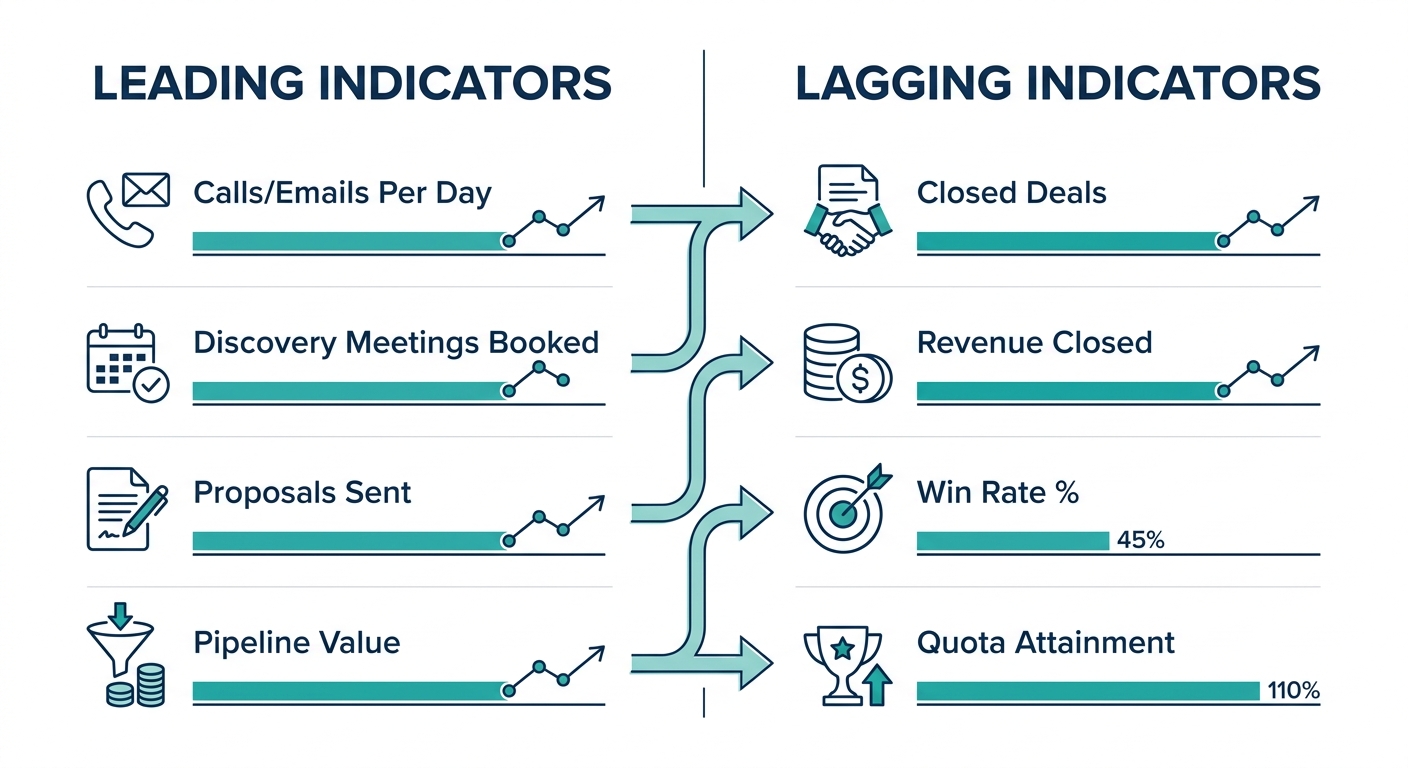
While revenue is the ultimate goal, it is a lagging indicator—it tells you what happened in the past. To excel in an interview, you must demonstrate a focus on leading indicators, which are measurable activities or signals that predict future success.
- Activity Metrics: Volume of outbound calls, emails sent, and LinkedIn touches.
- Conversion Metrics: The rate at which leads move from one stage (e.g., Prospecting) to the next (e.g., Discovery).
- Quality Metrics: Average deal size and the alignment of leads with the Ideal Customer Profile (ICP).
Transitioning from Warm Leads to Discovery Calls
The transition from a warm lead to a discovery call is where most pipelines leak. A structured approach ensures that high-intent prospects don't go cold.
The Lead-to-Discovery Process:
- Lead Scoring: Assign values based on engagement (e.g., webinar attendance, whitepaper downloads).
- Contextual Outreach: Use the specific trigger (the "why now") to customize the first touchpoint.
- Multi-Channel Sequencing: Execute a 7–10 day cadence across email, phone, and social media.
- The "Mini-Discovery": A 5-minute qualifying conversation to confirm pain points before booking a formal 30-minute discovery.
- Call Confirmation: Sending a calendar invite with a clear agenda to reduce no-show rates.
If you are preparing for a role that involves rigorous evaluation, practicing these transitions via an AI sales training platform can help refine your verbal delivery and objection handling.
Prioritizing High-Value Deals in a Multi-Stage Pipeline
A common mistake in sales interview preparation is claiming you treat every lead equally. Elite performers use a prioritization framework to ensure their time is spent where it yields the highest ROI.
- The 80/20 Rule: Focus on the 20% of accounts that have the potential to drive 80% of your revenue.
- Deal Velocity: Prioritize deals that are moving through the stages faster than the average sales cycle.
- Decision-Maker Access: Give weight to opportunities where you have a direct line to the "Economic Buyer" rather than just a "Champion."
Leveraging CRM Analytics for Strategic Growth
Your ability to use a CRM (like Salesforce or HubSpot) as a strategic tool is a major differentiator. In an interview, explain how you use CRM analytics to identify patterns. For example, if your "Discovery to Proposal" conversion rate is low, you might conclude that your discovery calls aren't uncovering deep enough pain points.
Using data-driven tools like a sales aptitude test can also help you understand your own strengths and weaknesses in data management before the interview.
Key Performance Indicators (KPIs) to Mention
When asked about how you track your performance, use these specific CRM metrics and their definitions to demonstrate your technical proficiency:
- Sales Velocity: A formula measuring how fast deals move through your pipeline and how much revenue they represent for a given period.
- Win Rate: The percentage of total deals closed-won compared to the total number of opportunities created.
- Average Deal Size (ADS): The average dollar value of all closed-won deals.
- Pipeline Coverage: The ratio of the total value of your pipeline vs. your actual sales quota (typically a 3x or 4x ratio is healthy).
- Customer Acquisition Cost (CAC): The total cost (marketing + sales effort) required to acquire a new customer.
- Sales Cycle Length: The average amount of time (in days or months) it takes to move a deal from first contact to signed contract.

The Shift Toward Simulation-Based Interviewing
Why Companies Use AI Sales Roleplays
Companies use AI sales roleplays to obtain objective, performance-based data on a candidate's ability to handle discovery and objections before they ever speak to a prospect. By utilizing [AI sales roleplay interviews](https://www.overvue.ai/for-hiring-teams), hiring teams can scale their evaluation process while ensuring every candidate is judged on the same criteria, significantly reducing the subjective bias found in traditional interviews.
These simulations allow managers to see how a candidate manages specific challenges, such as gatekeeper resistance or technical objections, in a standardized environment. Unlike a manual roleplay, which depends on a manager's availability and consistency, an AI simulation provides a consistent platform for sales interview preparation and assessment at scale.

Moving Beyond the Traditional Interview
The standard "tell me about a time" behavioral interview is often insufficient for identifying top-tier sales talent. Research suggests that traditional Q\&A sessions favor candidates with high verbal fluency over those with actual sales acumen. Practicing with simulators mimics real-world sales performance by requiring candidates to demonstrate active listening, discovery techniques, and objection handling in a live-interaction format.
When candidates engage with a simulator, they are not just reciting a script; they are building the muscle memory required for high-stakes calls. This transition toward simulation-based hiring ensures that organizations prioritize demonstrated skill and technical proficiency rather than the candidate's ability to simply "sell themselves" during a conversation.

Strategic Questions to Ask Your Interviewer
An interview is a two-way evaluation. While the hiring manager assesses your fit, you must determine if the company provides the environment, tools, and support necessary for you to hit your quota. Asking high-impact questions demonstrates your business acumen and proactive nature.

Understanding Top Performer Traits and Culture
To succeed, you need to know what excellence looks like within the specific context of their team. These questions help you identify if the organization values the same traits measured in a modern sales assessment test.
- What are the common traits among your top 10% of performers that differentiate them from the rest of the team?
- How does the team handle a missed monthly or quarterly target? (This reveals the balance between accountability and support).
- Can you describe the "ideal" salesperson for this role? Is it a hunter, a nurturer, or a technical closer?
- How do you define and protect your sales culture in a remote or hybrid environment?
Evaluating Tech Stacks and Sales Structure
Your productivity is often tied to the efficiency of the company's "sales engine." Use these questions to uncover potential bottlenecks in their sales hiring and evaluation process.
- What does the current sales tech stack look like, and how well is it integrated into the daily workflow?
- How are territories or lead distributions managed to ensure fairness and maximize coverage?
- What is the current ratio of Sales Development Rep (SDR) generated leads versus self-sourced opportunities for AEs?
- What is the biggest hurdle currently preventing the team from reaching its full potential?
Assessing Enablement and Training Support
A company that invests in your growth is a company where you can build a career. Focus on how they use technology, such as AI sales training, to ramp up new hires and coach veterans.
- What does the first 30, 60, and 90 days of the onboarding process look like?
- How often do managers provide direct coaching, and is it based on live call data or roleplay scenarios?
- Do you utilize [AI sales enablement tools](https://www.overvue.ai/for-enablement-teams) to help reps practice objection handling and call control outside of live prospects?
- What are the internal opportunities for career progression for someone who consistently over-performs?

Sales Interview Preparation FAQs
How long should a sales interview follow-up be?
A sales interview follow-up should be concise and focused on the value exchange discussed during the meeting. Aim for two to three short paragraphs that thank the interviewer for their time, highlight one specific pain point you are prepared to solve, and reiterate your interest in the position. Sending this note within 24 hours of the interview demonstrates the same urgency and attention to detail required in a fast-moving sales pipeline.
What is the most important skill to demonstrate in a sales interview?
While many candidates focus solely on closing skills, coachability is often the most critical trait to demonstrate. Hiring managers look for individuals who can absorb feedback and pivot their strategy without ego, as this indicates long-term growth potential and adaptability to the company methodology. Highlighting how you have applied management feedback to improve your conversion rates provides tangible evidence of this skill.
How do I answer 'What is your greatest weakness?' in a sales context?
When discussing a weakness, select a professional habit that you have already started to address with a structured system. For example, you might describe a past struggle with over-committing to low-probability leads and then explain the specific qualifying framework you now use to protect your time. This transparency shows that you possess the self-awareness to identify gaps and the discipline to implement corrective measures.
Is it okay to talk about failed deals in a sales interview?
Discussing failed deals is a valuable way to showcase your resilience and analytical maturity. Rather than avoiding the topic, lean into the details of a lost opportunity to explain what the experience taught you about the sales cycle or competitive landscape. Showing that you can perform a critical post-mortem and adjust your future prospecting tactics suggests you are prepared for the rigors of high-level performance assessments.
Elevate Your Interview Performance
Securing a top-tier sales role requires more than just rehearsing answers; it demands the ability to prove your value through data and live execution. You can refine your pitch using an AI sales roleplay platform to simulate complex deal scenarios and objection handling. Our 'Sales Interview Playbook' supports this preparation by providing a STAR method template and a performance data tracker to help you quantify your sales achievements for your next interview.