

Last updated: March 2026
Sales aptitude tests are crucial instruments designed to forecast your potential success in a sales role by measuring inherent cognitive abilities and specific selling competencies. You need to understand that these assessments move beyond generic personality profiling to evaluate core indicators like problem-solving speed, coachability, and drive—the very components that differentiate average performers from top-tier talent, especially within a sales skills assessment.
While preparing, you will encounter situational judgment questions that probe how you handle rejection or price objections, which is often balanced against quantifiable measures like numerical reasoning, frequently structured under demanding time constraints such as the 40 questions in 20 minutes format. By mastering the underlying structure and knowing precisely what employers seek—be it the drive to achieve (Why) or the strategic approach to negotiation (What)—you set the stage for proven results and superior hiring outcomes.
Your insight into these preparation mechanics directly informs the modern shift toward using AI-driven simulations that provide deeper behavioral data than paper-based metrics ever could.
What is a Sales Aptitude Test?
A sales aptitude test is a standardized assessment designed to measure a candidate's innate ability to acquire the skills necessary for success in a high-performance sales role. Rather than evaluating past experience, it focuses on cognitive potential and logical reasoning to predict how effectively an individual can master complex sales methodologies and adapt to evolving markets.
Aptitude vs. Personality
While both are critical components of a modern hiring strategy, they measure fundamentally different aspects of a candidate's profile. Understanding the distinction is vital for accurate candidate evaluation.
| Feature | Sales Aptitude | Sales Personality |
|---|---|---|
| Core Focus | Cognitive potential and innate mental horsepower | Interpersonal style and behavioral temperament |
| Problem-Solving | Ability to analyze data and navigate complex logic | Preference for specific conflict resolution styles |
| Learning Speed | How quickly a rep grasps new product technicalities | How a rep adapts their communication within a team |
| Work Context | Analytical logic and strategic thinking | Stress management, teamwork, and cultural fit |
Integrating a sales assessment test into your recruitment process allows your team to move beyond the limitations of a resume. While a sales personality test reveals if a candidate possesses the resilience to handle rejection, an aptitude test confirms they have the cognitive agility to handle technical objections and complex deal structures. Using both ensures you hire reps who are not just "culture fits," but high-potential performers capable of rapid growth.
Why Employers Use Aptitude Testing in Sales Recruitment
The business logic behind sales aptitude testing is rooted in risk mitigation and performance predictability. Traditional sales interview processes are notoriously subjective; research indicates that interviews alone have a low correlation with future job performance. By implementing a standardized sales candidate assessment, organizations can move beyond "gut feelings" to identify candidates with the cognitive abilities and behavioral traits necessary to excel in high-pressure environments.
According to the Society for Human Resource Management (SHRM), the cost of a bad hire can reach up to five times the employee's annual salary. In sales, this figure is often higher when factoring in lost territory revenue and damaged client relationships. Testing provides a defensive layer, ensuring that only those with a high probability of success move forward in the hiring funnel.
Reducing Turnover
In the sales industry, turnover rates are significantly higher than the national average across other sectors. High turnover creates a "leaky bucket" effect where recruitment and onboarding costs never yield a positive ROI. Aptitude testing addresses this by identifying resilience, coachability, and achievement drive before an offer is made. Candidates who score high on aptitude assessments are fundamentally better aligned with the demands of the role, leading to higher job satisfaction and longer tenures.

Data-Driven Hiring
Data-driven hiring allows sales leaders to build a repeatable, scalable recruitment engine. Instead of relying on a recruiter's individual preference, teams can use objective benchmarks to compare candidates across a level playing field. This is particularly effective when integrated with tools like Overvue's AI assessment features, which combine traditional aptitude metrics with real-world roleplay performance data.
Scoring Benchmarks
To effectively evaluate candidates, employers typically categorize results into specific performance tiers. While specific tests may vary, the following benchmarks represent the industry standard for most modern sales assessments:
| Score Range | Classification | Action Recommended |
|---|---|---|
| 80% - 100% | Top Tier | Highly recommended; demonstrates elite traits of top 5% performers. |
| 60% - 79% | Competent | Solid candidate; likely to perform well with standard coaching. |
| 40% - 59% | High Risk | Proceed with caution; likely to struggle with rejection or complex deal cycles. |
| Below 40% | Unsuitable | Low probability of meeting quotas or surviving the first 90 days. |
By adhering to these benchmarks, organizations ensure that their hiring decisions are backed by empirical evidence, ultimately leading to a more robust and profitable sales force.
Key Traits and Skills Measured in Sales Assessments
A comprehensive sales aptitude test goes beyond surface-level personality traits to identify the core psychological drivers of success. By quantifying these attributes, organizations can move past "gut feeling" and hire based on data-backed indicators of long-term performance.
Drive and Ambition: This measures a candidate's internal motivation to exceed quotas and their competitive nature. It is the "motor" that fuels prospecting and activity levels.
Coachability: One of the most critical predictors of success, this evaluates how effectively a representative absorbs feedback and modifies their behavior to improve results.
Resilience (Grit): Sales is a game of rejection. This trait measures a candidate's ability to maintain high performance and a positive mindset after losing a deal or facing a difficult territory.
Leadership and Initiative: Essential for senior roles, this measures the ability to take ownership of a sales process, mentor peers, and drive strategic initiatives without constant supervision.
Empathy and Emotional Intelligence (EQ): The ability to read a prospect's underlying needs and build genuine rapport, which is vital for complex, relationship-based selling.

The 5 Ws of Sales
To evaluate a candidate's tactical logic, modern assessments often analyze their understanding of the 5 Ws of Sales. This framework determines if a salesperson can navigate the complexities of a modern deal cycle:
Who: Identifying the true decision-makers and power players within a prospect's organization.
What: Defining the specific pain point the product solves and the tangible value it delivers.
Where: Understanding the competitive landscape and where the solution fits in the market.
When: Identifying the triggers or deadlines that create a sense of urgency for the buyer.
Why: Uncovering the deep-seated business or personal motivations behind the prospect's desire for change.
Effective sales recruitment requires a careful balance between measuring innate attitude and technical selling skills. While traits like drive are difficult to teach, technical proficiencies—such as objection handling, discovery techniques, and CRM management—can be developed through rigorous training. Research from the Harvard Business Review on Sales Talent suggests that the highest-performing reps possess a unique combination of "ego-drive" to close the deal and the empathy to understand the buyer's perspective. By using a sales aptitude test to screen for these foundational traits, employers can ensure they are investing in candidates who have both the "will" and the "way" to succeed in a demanding sales environment.

Common Sales Aptitude Test Questions and Scenarios
Sales aptitude tests typically use situational judgment tests (SJTs) to evaluate how a candidate reacts to real-world sales pressures. Instead of asking about theoretical knowledge, these questions place you in the middle of a high-stakes deal to measure your resilience, empathy, and strategic thinking.
Handling Rejection
Rejection is an inherent part of the sales cycle. Assessment questions in this category measure your emotional intelligence and your ability to remain persistent without becoming aggressive.
Scenario: You have been nurturing a high-value lead for three months. After a final presentation, the prospect informs you they have decided to go with a "no-decision" for this fiscal year due to budget freezes.
Ideal Response: A top-tier candidate acknowledges the prospect's situation professionally but doesn't simply walk away. The best approach is to ask for the specific reasoning behind the freeze to keep the relationship open and set a calendar reminder to follow up with a relevant industry case study in 60 days. This demonstrates tenacity and a long-term mindset.
Overcoming Price Objections
When a prospect says, "Your solution is too expensive," the test is not looking for how quickly you can offer a discount. It is evaluating your ability to reframe the conversation around ROI.
Scenario: A prospect likes your platform's features but insists that a competitor is offering a similar tool for 20% less.
Ideal Response: Avoid immediate discounting, which devalues the product. Instead, pivot to the unique value drivers that the competitor lacks—such as AI-driven sales coaching or faster implementation times. Ask the prospect to quantify the cost of the problem they are trying to solve to shift the focus from price to value.
Checklist: Common Sales Objection Scenarios
Preparing for a sales aptitude test requires understanding how to navigate these four core objection types:
- Price Objections: Focus on Return on Investment (ROI) and the cost of inaction rather than the sticker price.
- Rejection/Timing: Maintain professionalism and pivot to a "not right now" strategy by scheduling future touchpoints.
- Competitor Comparisons: Highlight proprietary features and superior support models without disparaging the competition.
- Status Quo/Bureaucracy: Identify the "pain points" of the current process and use social proof (case studies) to show the benefits of change.

Teamwork vs. Leadership in Sales
Modern aptitude tests also weigh your collaborative spirit against your individual drive. While sales is often viewed as a "lone wolf" profession, recruiters use these assessments to find candidates who can balance leadership—taking total ownership of their quota—with teamwork. This involves sharing winning scripts with peers or collaborating with Customer Success teams to ensure long-term retention. A successful candidate demonstrates they can lead a deal while effectively leveraging internal resources to provide the best possible experience for the client.
Understanding the Test Format: What to Expect
Modern sales aptitude tests are designed to measure more than just personality; they evaluate the raw cognitive horsepower required to succeed in high-pressure environments. While specific providers vary, the most rigorous assessments typically focus on two core technical reasoning categories:
Numerical Reasoning: This section evaluates your ability to work with numbers, percentages, and data sets. In a sales context, this translates to your capacity for calculating quotas, understanding commission structures, and interpreting market data on the fly to build a business case for a prospect.
Verbal Reasoning: This measures how well you can comprehend complex written information and draw logical conclusions. Sales professionals use this skill daily when dissecting client requirements, reading between the lines of a contract, or crafting persuasive, high-stakes email communications.
The 40/20 Format: Why Speed is a Sales Metric
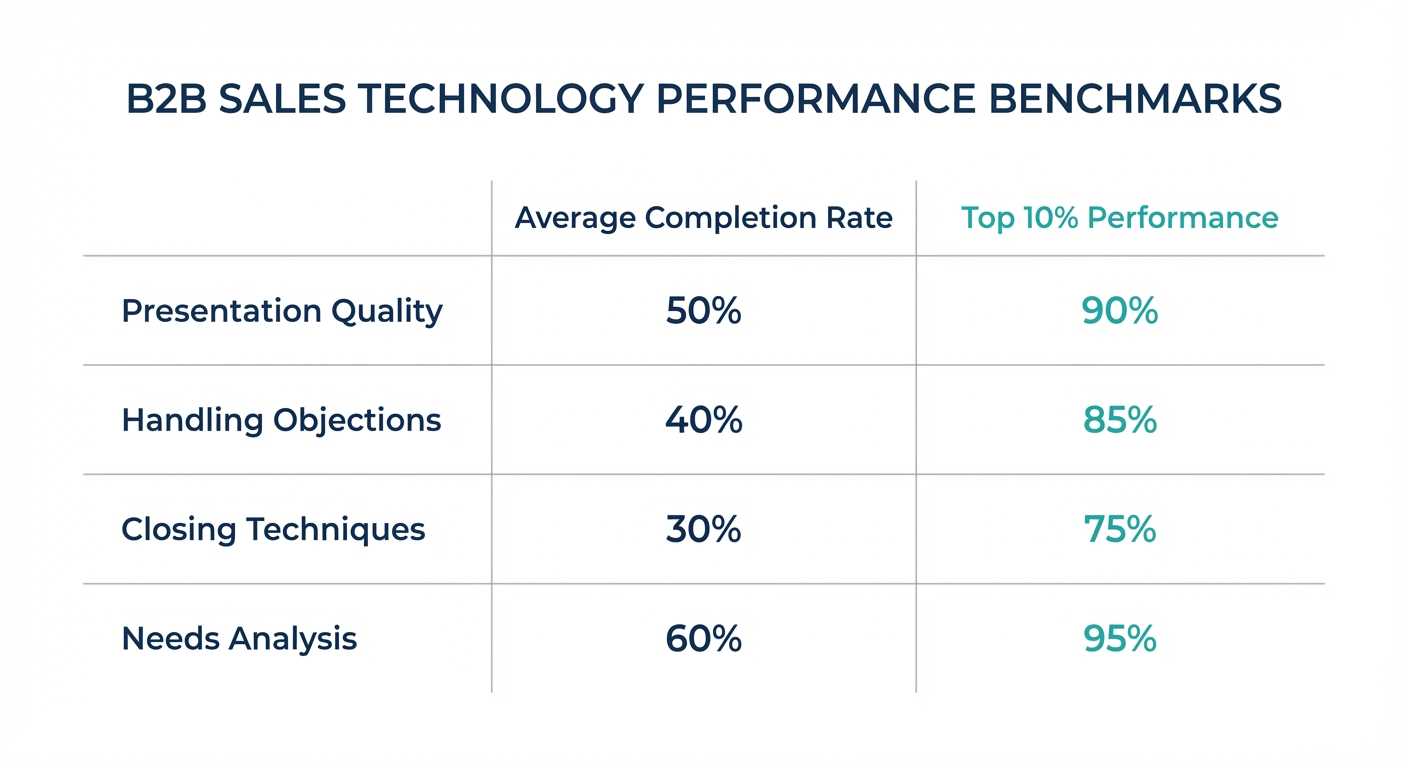
The most common technical format for these assessments is the 40/20 structure—40 multiple-choice questions to be completed in just 20 minutes. This gives you a mere 30 seconds per question, a pace that is intentionally designed so that very few candidates actually finish the entire test.
Employers use this format because speed of thought is a critical performance indicator for sales roles. In a real-world sales assessment, a rep doesn't have the luxury of unlimited time to handle a difficult objection or pivot during a discovery call. The 40/20 format mimics the high-velocity nature of a sales floor, identifying candidates who can remain calm and maintain accuracy while making split-second decisions. High scores in this format often correlate with a "quick study"—the type of rep who can master a complex product catalog and start hitting their numbers faster than the average hire.
How to Prepare for and Pass a Sales Assessment
Preparing for a sales aptitude test is different from studying for a traditional exam. Since these tests measure innate traits and behavioral tendencies, you cannot "cram" for them, but you can certainly optimize your performance through strategic preparation.
Follow these steps to ensure you are ready to showcase your full potential:
-
Understand the Target Role: Every sales position requires a different mix of traits. A high-volume SDR role requires resilience and high activity, while a strategic Enterprise AE role values complex problem-solving and long-term relationship building. Review the job description and align your mindset with the specific sales competencies the employer is likely seeking.
-
Brush Up on Core Sales Methodologies: Many assessments include situational judgment tests (SJTs) that ask how you would handle specific scenarios. Refresh your knowledge of fundamental frameworks, particularly regarding objection handling and discovery techniques. Understanding models like SPIN or MEDDIC can help you choose the most professional and effective responses.
-
Take Practice Tests: Familiarity breeds confidence. Use online resources to take sample sales aptitude tests. This helps you get used to the phrasing of personality questions and the logic behind numerical or verbal reasoning sections.
-
Prioritize Honesty and Consistency: Modern AI sales assessments are designed with built-in "lie scales" or consistency checks. If you try to game the test by answering how you think a hero salesperson would, you may end up with a fragmented profile that suggests a lack of self-awareness. Be your best professional self, but stay honest.
-
Simulate a Timed Environment: Many candidates fail not because they lack the skill, but because they run out of time. When practicing, use a timer to simulate the pressure of the real assessment. This trains your brain to make quick, decisive judgments—a key trait in high-performing sales professionals.

What to expect on the day
Mentally preparing for the logistics of the assessment is just as important as the content itself. On the day of your test, you should expect the following:
- Timed Sections: Most assessments are broken into modules. Some may give you a total time limit for the entire test, while others might give you only 60–90 seconds per question to prevent overthinking.
- Adaptive Questioning: Don't be surprised if the test seems to get harder. Many modern aptitude tests use adaptive logic, where the difficulty of the next question is determined by your previous answer.
- A Distraction-Free Environment: You will likely need to keep your camera and microphone on if the test uses AI proctoring or includes an interactive AI sales roleplay component. Ensure you are in a quiet, well-lit space.
- Forced-Choice Formats: You may encounter "ipsative" questions where you must choose between two equally positive traits (e.g., "I am highly organized" vs. "I am extremely persuasive"). These are designed to uncover your dominant strengths.

Modernizing Candidate Evaluation with AI Sales Assessments
Traditional aptitude theory has long served as the foundation for recruitment, positing that innate cognitive abilities and behavioral traits are the primary indicators of professional success. However, while a standard sales aptitude test can identify a candidate's theoretical potential, it often fails to capture the dynamic reality of a live sales environment. Modern AI sales assessments bridge this gap by evolving evaluation from static psychometrics to behavioral validation. By utilizing advanced machine learning, these tools move beyond "what a candidate knows" to analyze "how they perform," providing recruiters with a significantly more accurate forecast of job-fit and long-term retention.
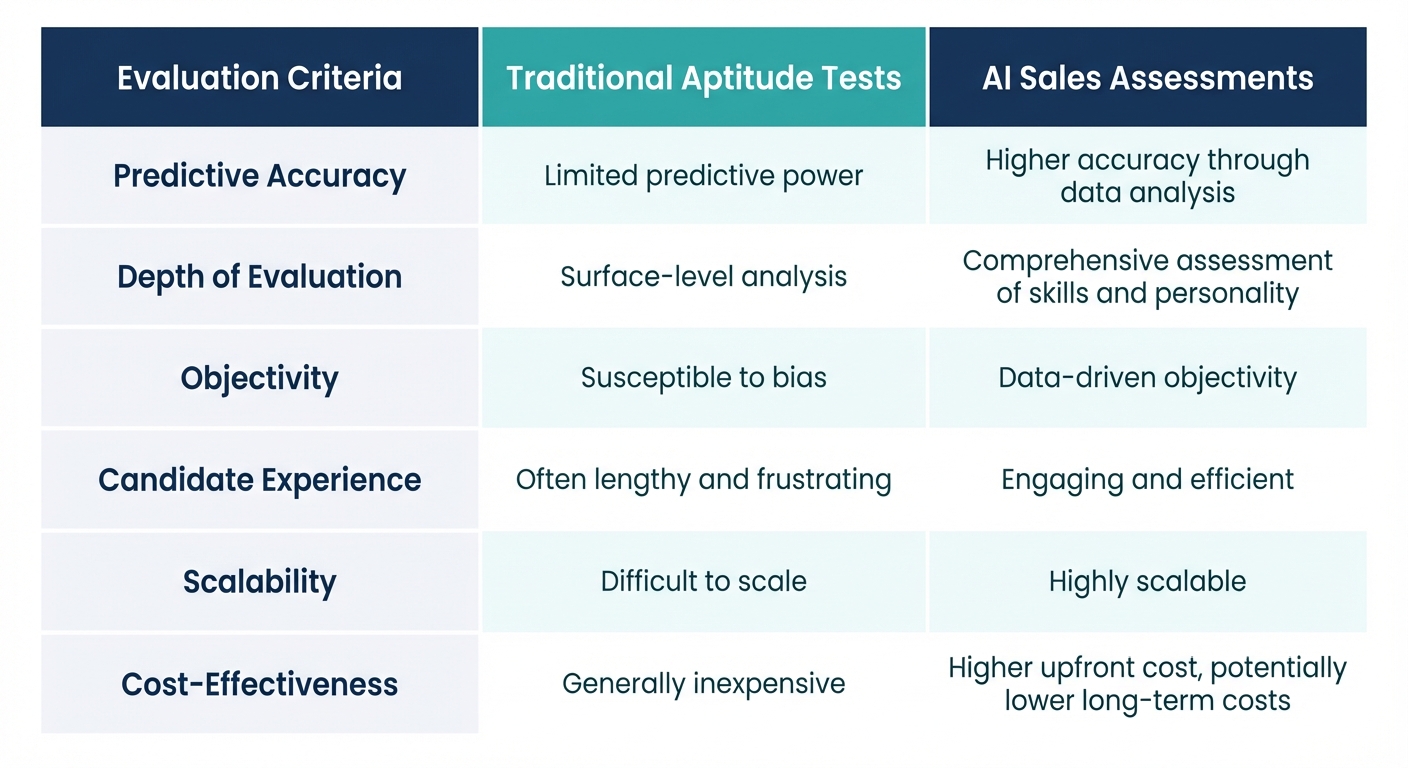
The most significant advancement in this modernization is the integration of AI-powered roleplay simulations. Unlike traditional mock interviews—which are difficult to scale and often influenced by interviewer bias—AI simulations provide a standardized, objective environment for every applicant. These simulations evaluate a candidate's ability to handle complex objections, maintain call control, and demonstrate emotional intelligence in real-time. This shift toward immersive evaluation ensures that hiring teams are no longer gambling on high-potential resumes, but are instead making data-driven decisions based on validated skills. As the sales landscape continues to favor remote-first and technical proficiency, AI stands as the superior solution for uncovering deep-seated competencies that traditional paper-and-pencil tests simply cannot reach.

Sales Aptitude Test FAQs
Can you fail a sales aptitude test?
While there is no universal failing grade, candidates can fail to meet the specific benchmarks set by an employer. Each company defines a passing score based on the traits they value most, meaning a candidate might be a poor fit for one role but an ideal match for another.
Are sales aptitude tests timed?
Timing is a critical component of these assessments. Many tests use a restricted timeframe to measure cognitive processing speed and the ability to make accurate decisions under pressure, often following a format like forty questions in twenty minutes.
Is there a difference between an aptitude test and a competency-based interview?
An aptitude test evaluates your inherent potential and cognitive capacity to learn new skills, whereas a competency-based interview focuses on your past performance and demonstrated behaviors. Using both methods provides a complete picture of a candidate's current abilities and future growth potential.
How long do sales assessment results remain valid?
Most sales assessment results are considered valid for twelve to twenty-four months. Because cognitive abilities and core personality traits remain relatively stable over time, these scores provide a reliable long-term outlook on a candidate's suitability for high-performance environments.
Modernize Your Talent Acquisition
Hiring the right people is the foundation of a scalable sales organization. By implementing AI sales assessments into your recruitment funnel, you can identify top performers with significantly higher accuracy than traditional interviews alone. This objective approach allows your team to focus on the candidates most likely to drive revenue and reduce turnover from day one.
For a deeper look at the best sales assessment tools available today, or to explore how AI-powered roleplay is transforming how teams hire and train, check out our complete guides.