Last updated: June 2026
Most sales candidates still treat their LinkedIn profile as a digital resume—a static list of titles and quotas they update only when they're job hunting. That approach is no longer enough. Modern sales hiring managers spend more time vetting candidates online than they do reading resumes, and the gap between what a candidate claims in an interview and what their public footprint actually shows has become one of the fastest ways to get cut from a process.
This guide walks through how to build a personal brand that does the work for you before the first call, how to audit and rebuild your digital footprint, how to post consistently when you barely have time to hit quota, and how to translate your brand into specific sales interview answers that prove the story is real. Done well, personal branding doesn't just help you stand out—it pre-qualifies you in the eyes of every hiring manager who looks you up.
Why Personal Branding Matters in Modern Sales Hiring
A decade ago, "personal branding" in sales was optional—a nice-to-have for ambitious reps trying to build inbound pipeline. Today, it functions as a screening filter. Hiring managers, recruiters, and even hiring committees check candidates' LinkedIn profiles, X/Twitter accounts, and Google results before the first conversation. The first interview you take is often the one happening in your absence, while a hiring manager scrolls through your activity feed.
The Pre-Interview That Happens Without You
Before a recruiter forwards your resume to the hiring manager, a quick LinkedIn check almost always happens. They're not looking for a perfect feed—they're looking for signals that match the claims on your resume. A candidate who claims to be a top performer at a SaaS startup but has zero content engagement, an unfinished profile, and a headline that still says "Aspiring Sales Professional" creates an immediate trust gap.
The hiring manager's question becomes: if this person can't sell themselves, how will they sell our product? This is the same logic that drives modern sales hiring assessments—the gap between what a candidate says and what they demonstrate is the most reliable predictor of on-the-job performance.
What Hiring Managers Are Actually Looking For
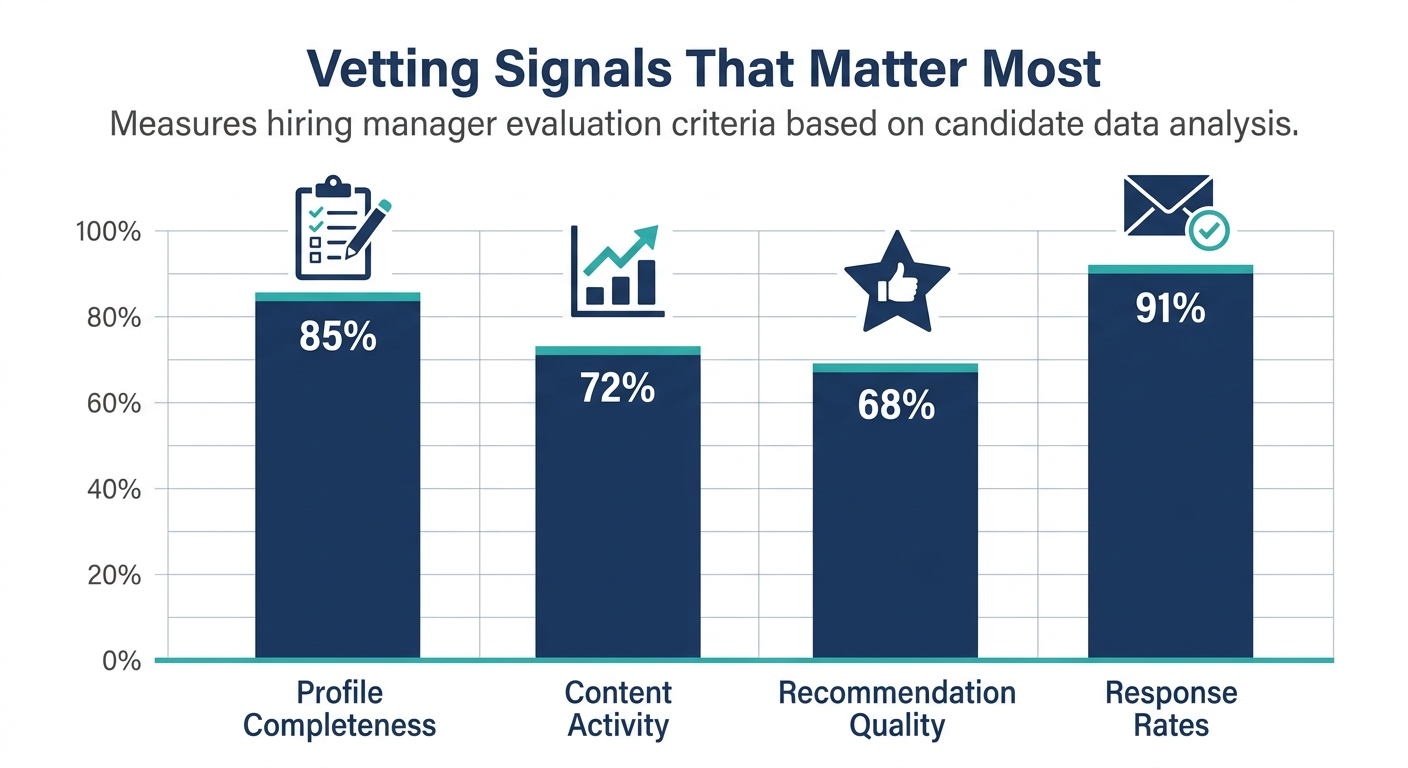
When a hiring manager opens your LinkedIn during the sales interview vetting process, they're running a quick mental checklist:
Notice how few of those signals are about the resume itself. Personal branding for sales interviews isn't about looking impressive—it's about looking internally consistent. Every signal a hiring manager finds should reinforce the story you're going to tell in the interview. This alignment is exactly what modern sales aptitude tests and personality assessments measure—consistency between demonstrated behavior and stated competencies.
The Compounding Effect of a Strong Brand
The reps who treat personal branding as a year-round practice—not a job-hunt activity—compound advantages over time. Recruiters reach out to them inbound. Hiring managers feel like they already know them. Past colleagues advocate for them publicly. The eventual interview process feels less like a sales pitch and more like a confirmation of a decision the hiring team has already started making.
Auditing Your Current Digital Footprint
Before you build, you have to know what's already out there. Most candidates dramatically underestimate what a hiring manager will find in fifteen minutes of light Googling. The audit phase isn't about scrubbing your history—it's about understanding what story your existing footprint already tells, and where it contradicts the story you want to tell in interviews.
The Five-Minute LinkedIn Audit
Open your LinkedIn profile in an incognito window. Look at it the way a hiring manager would.
| Section | Strong Signal | Weak Signal |
|---|---|---|
| Headline | Specific role + market + outcome | Generic title only |
| About | Narrative with quantified results | Empty or copied from JD |
| Experience | Each role names product, segment, quota attainment | Bullet lists of responsibilities |
| Featured | Case studies, posts, or external work | Empty |
| Recommendations | Recent, specific, from buyers or managers | None, or only peer-traded |
| Activity | Comments and posts within the last 90 days | Last activity over a year ago |
If three or more rows fall into the "Weak Signal" column, your profile is actively working against you. Most candidates spend hours rehearsing interview answers but won't spend thirty minutes on the asset that hiring managers actually look at first.
Beyond LinkedIn: The Wider Search
Google your own name in an incognito window. Add your city or current company. What appears on the first page? For sales candidates, the typical surface area includes:
Anything embarrassing, outdated, or contradictory is a liability. A 2019 tweet complaining about a former employer can torpedo a final-round conversation. The goal isn't to be sanitized—it's to make sure nothing in your public record undermines the sales interview preparation you've put in.
Negative Signals to Eliminate First
Before you start posting brilliant content, fix the things that are actively hurting you:
This cleanup phase is unsexy but high-leverage. A clean baseline lets every future signal land harder.
Building a LinkedIn Presence That Speaks for You
Once the audit is done, the rebuild starts. Think of your LinkedIn profile less as a resume and more as a landing page—every section is doing a specific job for a specific reader (the hiring manager, the recruiter, or the buyer who'll Google you mid-deal).
The Headline as Your Value Prop
Your headline is the single most over-indexed line in your profile. It appears next to every comment you make, every connection request you send, and every search result a hiring manager scrolls past. Generic titles ("Account Executive at Acme") waste this real estate.
Strong headline formulas for sales candidates:
The third form only works if you're prepared to back it up with content. The first two work for anyone with a track record. Avoid emoji walls, "open to work" badges that aren't current, and any phrasing that sounds like a corporate mission statement.
The About Section as Your Cold Open
The About section is where most candidates lose the reader. The mistake is treating it like a third-person bio. Instead, write it the way you'd write a great cold email opener—hook, specific value, then a clear next step.
A strong structure:
This is the same structure used in modern sales personality assessments—the goal is to give a hiring manager a fast, accurate read on how you'll actually behave on the job.
Featured Section as a Portfolio
The Featured section is wildly underused by sales candidates. It's where you turn claims into evidence. Strong things to feature:
Three to five Featured items is the sweet spot. Each one gives the hiring manager a reason to spend an extra two minutes on your profile—and every extra minute makes a "yes" more likely.
Content Strategy: Why Posting Matters (and How to Actually Do It)
This is where most sales candidates know they should be doing something and don't. Posting on LinkedIn is one of the highest-leverage personal branding activities available, and it's also the one most candidates avoid because they don't have time, don't know what to say, or are terrified of looking try-hard.
The data is clear on why it matters:
The honest problem: most working AEs and SDRs cannot realistically produce two to three high-quality LinkedIn posts a week on top of hitting quota. This is why an increasing number of sales professionals work with a LinkedIn ghostwriter to translate the deal stories, market insights, and customer conversations they already have into a consistent posting cadence. The point isn't to outsource your voice—it's to convert raw selling experience you already have into content that earns hiring managers' attention while you sleep.
If you're going the self-published route, the lowest-friction content formats for sales candidates are:
Avoid generic motivational content, vague "leadership" platitudes, and humblebrags about quota. Specific beats inspirational every time.

Engagement Strategy, Not Just Broadcasting
Posting is half the work. The other half is showing up in the comments of the people you'd eventually want to work with—or work for. Five thoughtful comments a week on posts from VPs of Sales, CROs, and respected peer AEs will, over six months, build more recognition than fifty broadcast posts.
The mistake to avoid: lazy comments ("Great post!" or worse, AI-generated agreement). Strong comments add a specific data point, a counterexample, or a question that extends the original post. Done consistently, this builds a network of warm contacts who already know your thinking before you ever apply for a role on their team.
Translating Your Brand into Interview Performance
A strong brand gets you into the room. The interview is where you have to prove the story is real. The most common failure mode for candidates with polished LinkedIn presences is the disconnection moment—when an interviewer pokes at a claim from your profile and the verbal answer doesn't match the public narrative.
Aligning Your LinkedIn Narrative With Your STAR Stories
Pull up your LinkedIn profile and the resume you've submitted. Now write down the three to five STAR stories you plan to use in interviews (Situation, Task, Action, Result). Every single number, customer segment, and methodology in those stories should be reflected somewhere in your public footprint.
If your STAR story about closing a $400K deal at a healthcare company doesn't appear anywhere on your LinkedIn, the hiring manager either doesn't know about it (lost leverage) or, worse, wonders if it's exaggerated. The fix is simple: make sure your top deal stories appear in your Experience section, in a Featured post, or in your About narrative. Brand and interview answers should reinforce each other, not run on parallel tracks.
Showing Social Selling as a Hireable Competency
For SDR and AE roles in particular, your personal brand is itself a demonstrable skill. A hiring manager looking at a candidate with 2,000 relevant followers, regular posting, and warm comments from VPs at target accounts is looking at demonstrated pipeline generation capacity. That's worth more than any answer to "tell me about your prospecting approach."
When the topic comes up in the interview, lean into it specifically:
This kind of specificity is exactly what a modern sales assessment test tries to surface in roleplays—the move from generic claims to concrete, repeatable behaviors.
When the Interviewer Mentions Your Content
If your brand is working, this will start happening: the interviewer opens by referencing something you posted. This is the highest-leverage moment in the entire process, and most candidates fumble it. Two rules:
Practicing the Bridge
If you want to test how well your brand and interview story align, run a few AI roleplay sessions where you're prompted to talk through your background, or use a structured AI sales training flow to drill the bridge between your written narrative and your live delivery. A consistent narrative under pressure is the goal—if you find yourself adding qualifiers or contradicting your profile, you've found the seams that need work before the real interview.

Common Personal Branding Mistakes Sales Candidates Make
For every well-built personal brand there are ten that actively cost candidates offers. Most failures fall into a small number of repeating patterns.
Over-Polishing Until You Sound Like a Bot
The most common mistake in 2026 is over-polished, ChatGPT-written content that any experienced reader can spot from the first line. The hallmarks: paragraphs that begin with "In today's fast-paced sales landscape," lists of three with perfect parallel structure, and earnest conclusions that say nothing. Hiring managers read hundreds of these posts a month—yours has to sound like you, not like a tool's default voice.
If you're using AI assistance for content (and most candidates should), the test is whether a former colleague reading the post would recognize your voice without seeing your name on it. If not, the polish has gone too far.
Buzzword Overload
"Growth-minded, customer-obsessed, results-driven, MEDDIC-certified, consultative seller." If your headline or About section looks like this, every adjective is canceling out the next. Strip every modifier that doesn't earn its place. A specific number beats five generic adjectives.
Inconsistency Between Resume and LinkedIn
Mismatched dates, different job titles, missing roles—every inconsistency is a question a hiring manager has to ask, and every question is a small trust deduction. Before any interview, do a side-by-side diff of your LinkedIn and the resume you've submitted. They should match exactly on titles, dates, and the biggest accomplishments.
Performing Confidence You Haven't Earned
A common trap for early-career SDRs and AEs is performing senior-level authority on LinkedIn—posting hot takes on enterprise selling when most of your reps have been transactional, or critiquing methodologies you've never actually used. Buyers, peers, and hiring managers can see through this immediately, and it costs you more than silence would. Build your brand around what you actually do, then expand the surface area as your experience does.
Ignoring the Comments and DMs
A brand without conversation is just a billboard. If you post but never respond to comments, never reply to thoughtful DMs, and never engage with the people engaging with you, you're signaling to every hiring manager that this is performative, not relational. Sales is relational. Your brand should be too.

A 30-Day Brand-to-Interview Sprint
If you're actively interviewing and need to move fast, a focused 30-day sprint can dramatically improve your standing in any active hiring process. The sequence below compresses every stage from cleanup through to live interview prep.
Week 1: Audit and Cleanup
Week 2: Voice and Narrative
Week 3: Content Activation
Week 4: Interview Bridge

Personal Branding for Sales Interview FAQs
Do I really need to post on LinkedIn to get hired in sales?
You don't strictly need to post to get hired, but in 2026 a complete, active profile materially shortens hiring cycles and increases inbound recruiter activity. Reps who post regularly are more likely to be sourced directly by hiring managers, and they're significantly more likely to convert from first call to final round because the hiring team feels they already know the candidate. If you can't post consistently yourself, the alternatives are working with a ghostwriter or focusing your time on high-quality engagement (commenting, DMs) instead.
How long does it take to build a useful personal brand for interviewing?
A focused 30-day sprint is usually enough to fix a weak profile and start generating recognition within target hiring teams, especially if you combine cleanup with targeted commenting and posting. A truly compounding brand—the kind that creates inbound recruiter interest year-round—takes 6 to 12 months of consistent activity. The good news is that the most important step (a clean, internally consistent profile) takes less than a weekend.
What should sales candidates post about on LinkedIn?
The strongest content formats for sales candidates are deal post-mortems, buyer-side observations from recent conversations, contrarian takes on accepted sales practices, and teardowns of public campaigns or messaging. Avoid generic motivational content, vague leadership commentary, and quota humblebrags. The test for any post: would a hiring manager learn something specific about how you think about selling? If not, don't publish it.
Can a strong personal brand make up for a weaker resume?
A strong personal brand can absolutely move you from "filtered out" to "worth a conversation" when your resume alone wouldn't earn the meeting. It cannot fully replace the underlying performance—if your numbers don't hold up under interview scrutiny, no amount of branding will close that gap. The right way to think about it is leverage: a strong brand amplifies whatever your actual track record is, in both directions.
Should I work with a ghostwriter or write my LinkedIn content myself?
Both are valid. Writing yourself preserves voice and forces you to clarify your thinking, but most working AEs and SDRs realistically can't sustain a posting cadence on top of quota carrying. Working with a ghostwriter who interviews you and translates your real experiences into posts is the most common solution for senior reps and sales leaders. The non-negotiable in either case is that the content has to reflect your actual experience and voice—if it doesn't, hiring managers will spot the disconnect in the first interview.
How do I handle it if an interviewer brings up my LinkedIn content?
Don't downplay it. Treat it as the opening of a peer conversation: confirm the post was deliberate, briefly explain the experience that led to it, and ask a question back that extends the discussion. The worst response is false modesty, which signals your brand isn't intentional. The best response treats the moment exactly as it is—a hiring manager warming up a conversation with a candidate they're already inclined to like.
From Brand to Hired: The Last Mile
A strong personal brand is leverage—it gets you into the room with shorter selling cycles, warmer first conversations, and a hiring team that's predisposed to say yes. But leverage only pays off when you can perform under the actual pressure of the interview, and the candidates who win consistently are the ones whose brand, resume, STAR stories, and live roleplay performance all tell the same story.
If you're actively interviewing, pair the 30-day brand sprint above with structured interview preparation using an AI sales roleplay platform to make sure your verbal performance matches the polished narrative your profile is putting out. The hiring teams using tools like Overvue to assess candidates are looking for exactly this kind of consistency between stated brand and demonstrated skill—give them no reason to doubt that what they read online is what they'll get in the role.
Ready to put it to the test? Get started with Overvue's AI sales roleplay to pressure-test your interview narrative before your next round.